A Romanian researcher is part of the team of Cambridge researchers that invented artificial fuel-producing leaves
A group of researchers based at Cambridge University has been working for several years under the guidance of Professor of Energy and Sustainability Erwin Reisner, in order to develop a scalable solution to the gigantic problems posed by…
Maiavankline · Journalist
· Updated · 3 min read
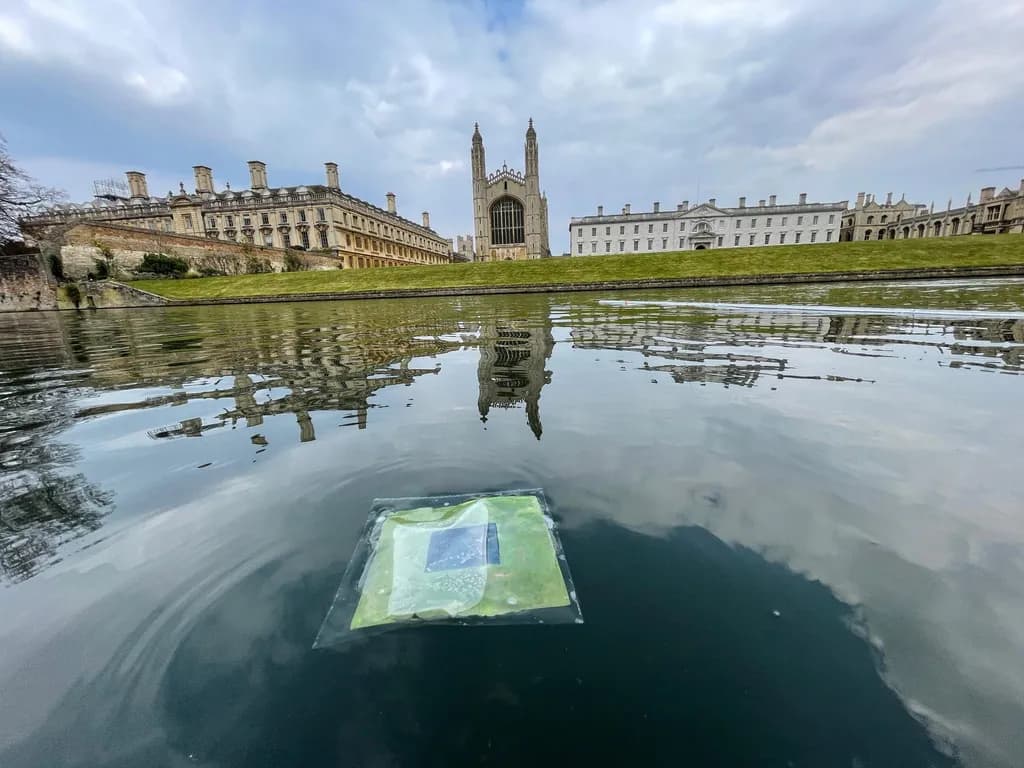
A group of researchers based at Cambridge University has been working for several years under the guidance of Professor of Energy and Sustainability Erwin Reisner, in order to develop a scalable solution to the gigantic problems posed by energy and fossil fuel depletion.
As an alternative to petrol, the team developed floating artificial leaves that generate clean fuel from sunlight and water.
“The University of Cambridge researchers said they took inspiration for the ultra-thin, flexible devices from photosynthesis, the process by which plants convert sunlight into food,” writes BBC.
The path to this extraordinary scientific invention is as follows:
In 2019, the team developed an artificial leaf that makes syngas – a key intermediate in the production of many chemicals and pharmaceuticals – from sunlight, carbon dioxide, and water. However, this earlier prototype, which generated fuel by combining two light absorbers with suitable catalysts, incorporated thick glass substrates and moisture-protective coatings, which made the device bulky.
“Since they’re both heavy and fragile, they’re difficult to produce at scale and transport,” says Dr. Virgil Andrei, a Romanian researcher in Cambridge’s Yusuf Hamied Department of Chemistry, and the paper’s co-lead author.
“We wanted to see how far we can trim down the materials these devices use, while not affecting their performance,” says Reisner, who led the research.
“If we can trim the materials down far enough that they’re light enough to float, then it opens up whole new ways that these artificial leaves could be used.”
“If scaled up,” writes Sarah Collins for the University of Cambridge, “the artificial leaves could be used on polluted waterways, in ports or even at sea, and could help reduce the global shipping industry's reliance on fossil fuels.”
It would be the first time clean fuel has been generated on water.
For the new version of the artificial leaf, Collins explains that the researchers took their inspiration from the electronics industry, where miniaturization techniques have led to the creation of smartphones and flexible displays, revolutionizing the field.
In order to deposit light absorbers onto lightweight substrates and protect them against water infiltration, the team used thin-film metal oxides and materials known as perovskites, and then covered the devices with micrometer-thin, water-repellent carbon-based layers that prevented moisture degradation.
Free newsletters
Romania, in your inbox before your first coffee.
Get the Daily — the morning briefing, free, in English, unsubscribe anytime. Want business, real estate or travel digests too? Pick your newsletters →