(P) International Baccalaureate Diploma Programme (IB) at International School of Bucharest (ISB)
Insights on the IB Diploma Programme from Oana I., high achieving ISB student, 40 points at IB.
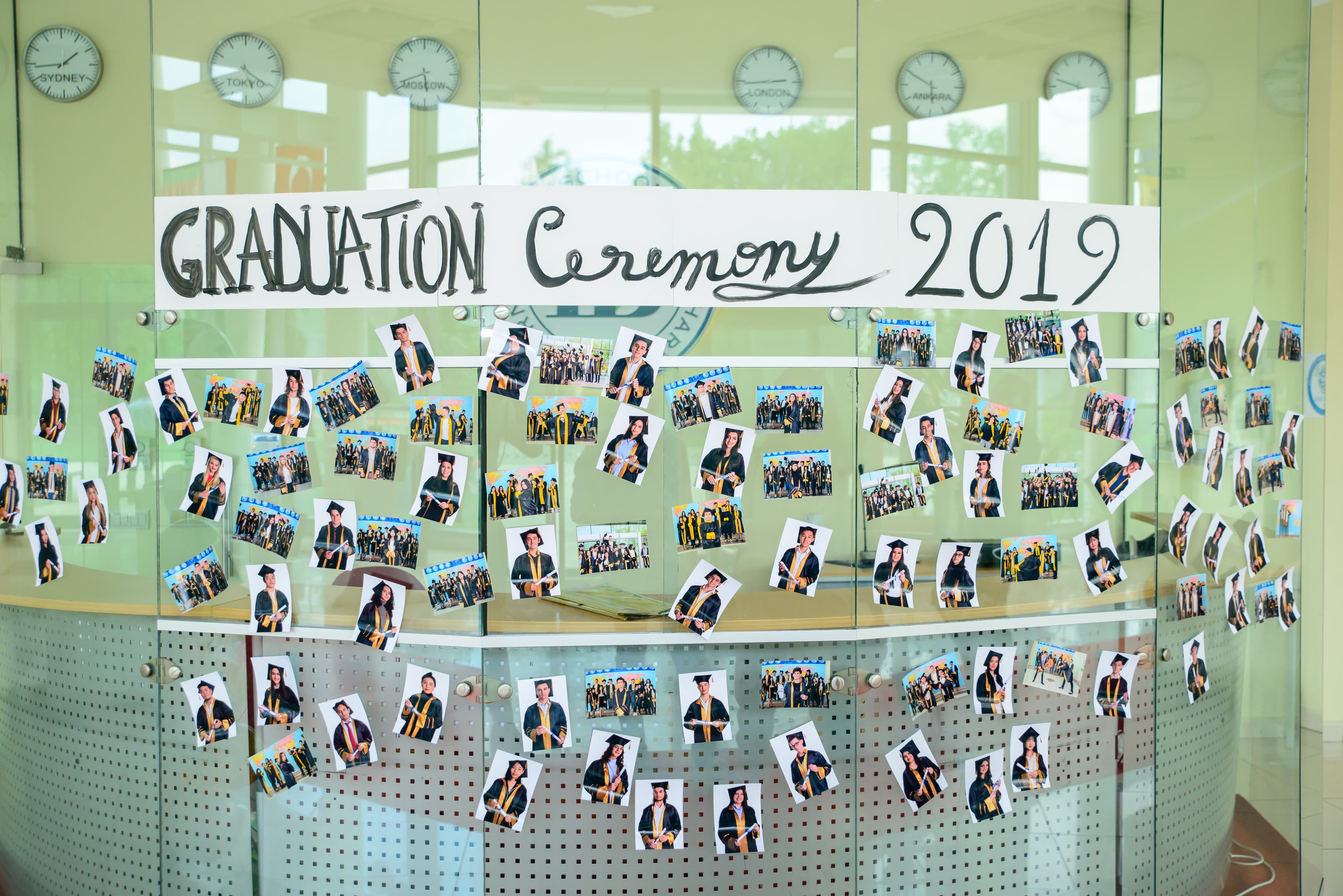
Insights on the IB Diploma Programme from Oana I., high achieving ISB student, 40 points at IB.
One of the main benefits of the IB is that it is geared to prepare you for university. It also encourages more mature discussions with teachers, getting feedback and asking questions, allowing students to become more engaged and proactive about improving their work.
"From early school years we are expected to finish high school, but how life unfolds beyond that is less certain. As high school has just come to an end for me, I look back on it and see how I’ve changed, both through and alongside my academic life. Through the past four years, I’ve been a student in two different schools with two different curricula. The first one followed the Romanian schooling system while the second one, International School of Bucharest, is part of the International Baccalaureate (IB) organisation. I took the (IB) Diploma Programme, in which six subjects are studied intensively, in English, over the course of the last two years of Secondary School."
"The transition between the two educational systems caused a bit of a culture shock for me, as the way in which you are examined vastly differs between the two. While the Romanian one focuses more on memorisation, the International Baccalaureate is more focused on applying and discussing the information acquired. Of course, in subjects like Biology, there is still a large focus on memorisation, but you are also taught research skills and more practical applications. For instance, the Internal Assessments works appraised by the teachers in your school, count toward your final baccalaureate grade for each subject and play a large part in emphasising the application of knowledge. The task varies from subject to subject but in general, it is an investigation on a topic of your choice. For English, we had to produce a piece of writing based on a fictitious work. It was extremely enjoyable to play around with the characters and think about what they would have said or what they were trying to achieve and describe situations not featured in the book. More good examples are the investigations we carried out in biology and psychology. As the career, I wish to pursue is in experimental psychology, these skills, I have no doubt, will prove to be invaluable in the future."
"These creative tasks were an interactive way of learning how to write essays and reports in a concise manner. Even if it might not work for every student, I found the practice to be extremely helpful in preparing me for the future. This type of teaching would be hard to implement in the Romanian system, as your attention is spread out between a lot more subjects which you may not necessarily like as much. The freedom resulting from this system also teaches you about the accountability of your actions. This may not be as fun, but I believe it’s an indispensable lesson to learn before joining the adult world."
Free newsletters
Romania, in your inbox before your first coffee.
Get the Daily — the morning briefing, free, in English, unsubscribe anytime. Want business, real estate or travel digests too? Pick your newsletters →