(P) How several students from the British School of Bucharest managed to build a car and test drive it on ice in Lapland
It is said that children are like sponges, which absorb instantly whatever information they receive in their early years. If their curiosities are satisfied, their desire for knowledge grows from year to year. However, if these curiosities…
It is said that children are like sponges, which absorb instantly whatever information they receive in their early years. If their curiosities are satisfied, their desire for knowledge grows from year to year. However, if these curiosities remain unanswered, the passion gradually dies out in most cases. It is one of the guiding principles of the British School of Bucharest (BSB) to offer students a wide range of activities to help them discover and nurture their passions so their training for the future is natural and assumed.
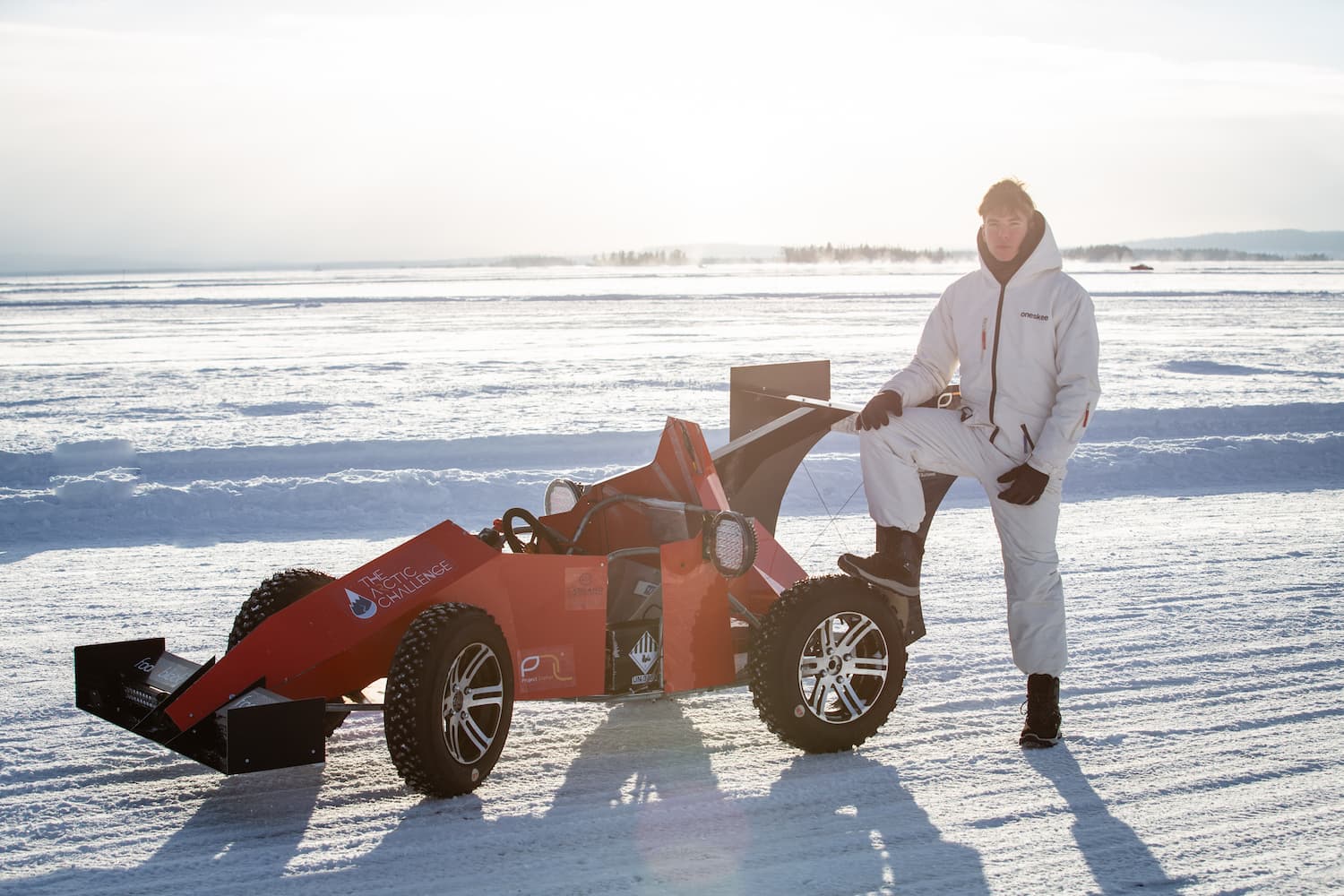
This year, after much hard work, several of our school students managed to test drive a car they built from scratch, on an extremely challenging circuit, on a frozen lake in Lapland. It was Tudor Atanasiu who conceived and created the Project Zephyr educational programme as a project for students over 12 years old.
I have always been passionate about the hard sciences and how knowledge takes on new dimensions when you apply what you learnt in the classroom. You test, you make mistakes, you start over, and things end up taking on forms you might never have imagined otherwise.
That is how I ended up creating Project Zephyr and then putting it into practice at the Innovation Hub at BSB. The aim was to create a link between multiple disciplines - Maths, Physics, Design, Art and Chemistry - in a project that would mean a lot to children but also has meaning and impact in real life. The gap between what they achieve and real life is extremely small, and in this way, they learn that school is not hard, but doing something you don't like is hard. - Tudor Atanasiu, Project Zephyr coordinator.
Within this programme, students built an electric car from scratch, and besides the technical side, they learnt important lessons about teamwork, management, marketing, legislation and business.
It is a great way to get children excited about science. Their creativity takes flight when they start building a real electric car from scratch. Things get even more advanced when they take it out on the track to test drive it, but even then, I felt that there was something essential missing, that more than this was needed. - Tudor Atanasiu, Project Zephyr coordinator.
This is how The Arctic Challenge came about, an event organised near The Arctic Circle specifically to draw attention to dramatic climate change and to implement sustainable technology. Where we want to involve teams of students from around the world to come with their own electric cars and test them on an atypical circuit on a frozen lake. Therefore, we wanted to take the project to a place that would teach students about sustainable technology and innovation, all the challenges of today's world, such as climate change, that we need to look at carefully for a better future. - Tudor Atanasiu, Project Zephyr coordinator
Free newsletters
Romania, in your inbox before your first coffee.
Get the Daily — the morning briefing, free, in English, unsubscribe anytime. Want business, real estate or travel digests too? Pick your newsletters →