No Shortcuts: How Cambridge School of Bucharest Is Preparing Students for a World in Motion
Alexandra Dache, Ph.D., IB Coordinator at Cambridge School of Bucharest (CSB) and National Coordinator of the International Economics Olympiad (IEO), shares more about how the International Baccalaureate Diploma Programme prepares students…
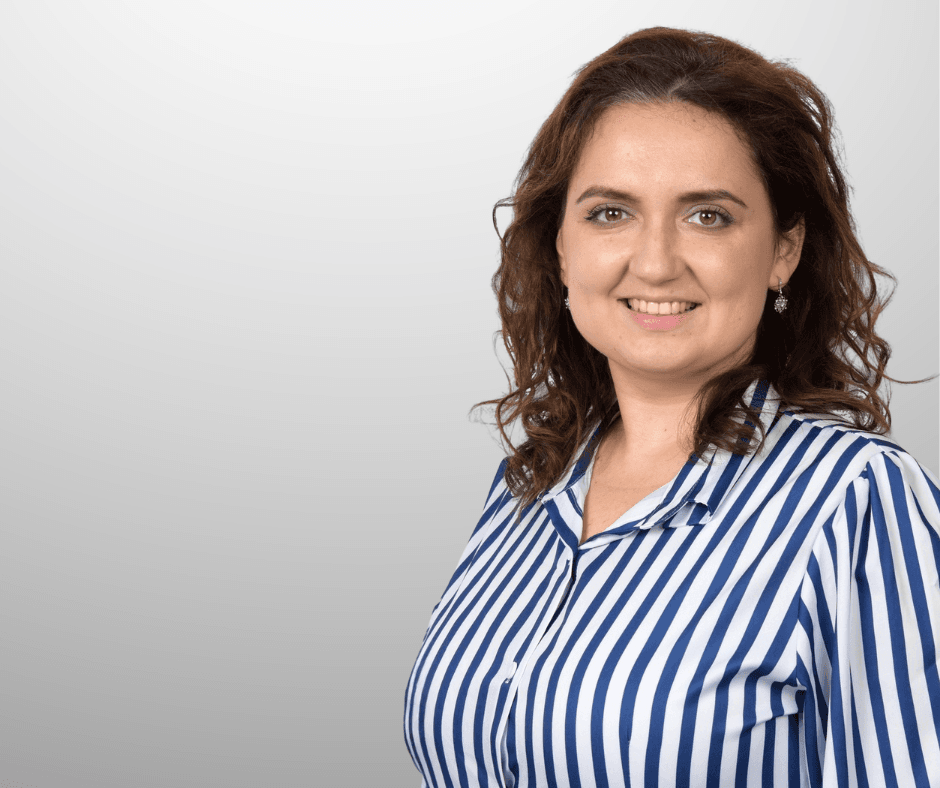
Alexandra Dache, Ph.D., IB Coordinator at Cambridge School of Bucharest (CSB) and National Coordinator of the International Economics Olympiad (IEO), shares more about how the International Baccalaureate Diploma Programme prepares students not just for university, but for lifelong learning and adaptation.
As artificial intelligence reshapes industries and university pathways grow more competitive, families are increasingly asking a difficult question: What kind of education truly prepares students for an unpredictable future? At Cambridge School of Bucharest, the answer has taken shape in the form of offering both the CIE A Levels and the International Baccalaureate Diploma Programme.These pathways were not chosen for their ease, but for their ambition.
The International Baccalaureate Diploma Programme, now in its second year at the school, has attracted students willing to take on a programme defined by depth, discipline, and intellectual risk. They are not promised shortcuts. Instead, they are asked to connect ideas across subjects, manage long-term projects, and confront complexity early on.
That choice is already bearing fruit. Members of CSB’s first IB Diploma cohort have received offers from leading universities, including medicine at the University of Cambridge and business and economics at the University of Bath, early markers that academic rigor combined with independence is resonating beyond the classroom, according to Alexandra Dache, Ph.D., IB Coordinator at CSB.
But grades and destinations are only part of the picture. As artificial intelligence accelerates decision-making across finance, policy, and labour markets, the ability to interpret human behaviour, weigh ethical trade-offs, and understand uncertainty has become increasingly valuable. Economics and the social sciences, often overshadowed by the rise of STEM, are reasserting their relevance. “Technology can process information, but it cannot replace human judgment, ethical reasoning, or an understanding of how societies function,” says Alexandra Dache.
Inside the classroom, theory meets application. Students test models against real data, debate global issues, and learn to sit with unanswered questions. The same mindset drives preparation for international academic competitions, where excellence is built through sustained mentoring and resilience rather than raw talent alone.
In a world where career paths are increasingly fluid, the focus shifts from predicting jobs to developing durable ways of thinking. As Ms. Dache puts it, students may not know what the future holds, but they can learn how to meet it with confidence.
Read the full interview below:
Free newsletters
Romania, in your inbox before your first coffee.
Get the Daily — the morning briefing, free, in English, unsubscribe anytime. Want business, real estate or travel digests too? Pick your newsletters →