Former Romanian president, PM charged again with crimes against humanity in 1990 miners’ riot case
The General Prosecutor's Office announced on Wednesday, January 15, that criminal prosecution has been initiated again against former president Ion Iliescu and ex-prime minister Petre Roman in the case targeting the violent crackdown of…
Irina Marica · Journalist
· Updated · 3 min read
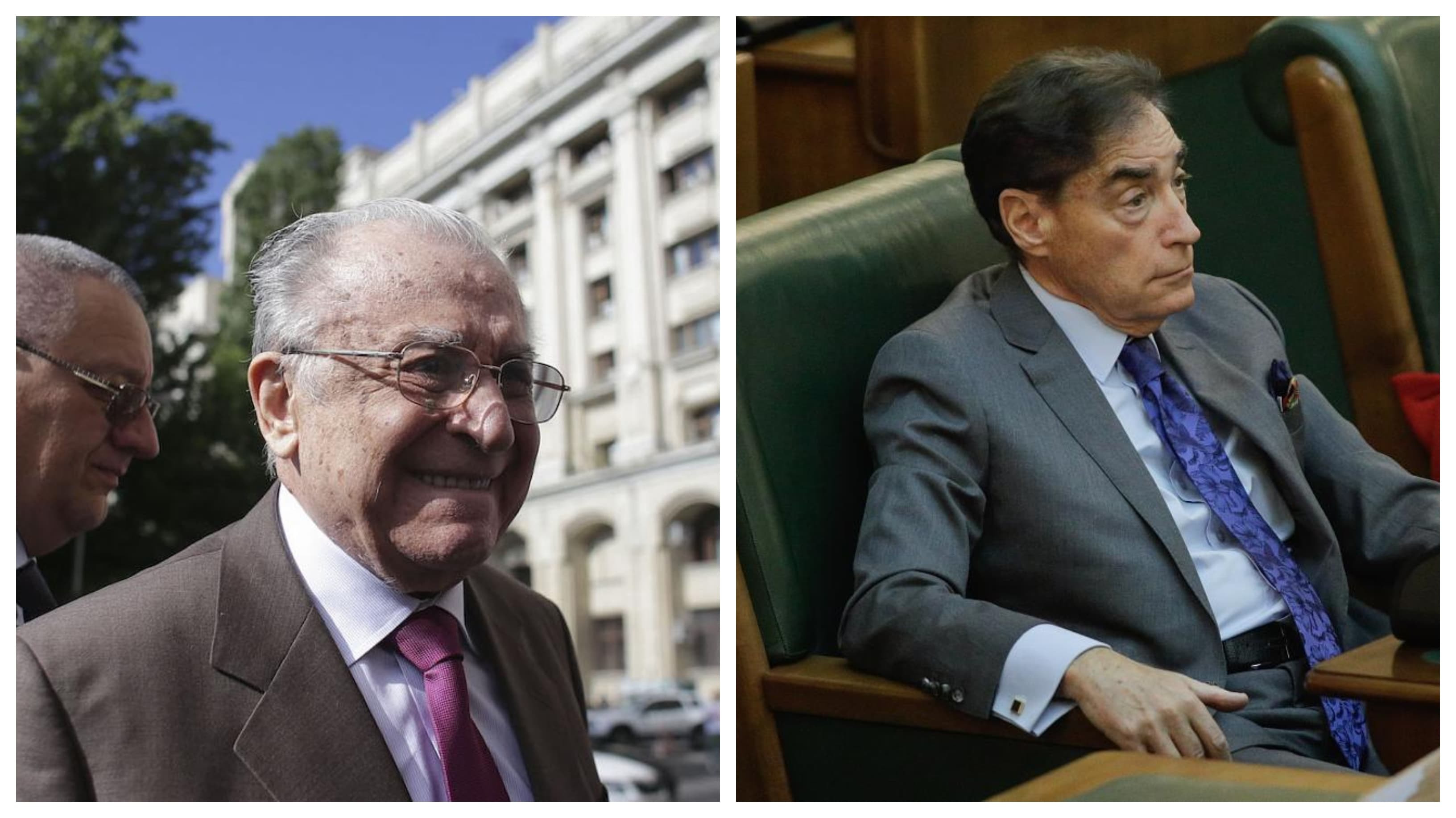
The General Prosecutor's Office announced on Wednesday, January 15, that criminal prosecution has been initiated again against former president Ion Iliescu and ex-prime minister Petre Roman in the case targeting the violent crackdown of the protests in Bucharest's University Square on June 13-15, 1990, also known as the Mineriada (miners' riot). The two are facing charges of crimes against humanity.
Initially, in June 2017, Ion Iliescu and the other defendants were prosecuted for crimes against humanity in this case, but in December 2020, the High Court of Cassation and Justice decided to return the case to the Military Prosecutor's Office for a complete reinvestigation.
The prosecutors say that "in June 1990, individuals holding decision-making roles in the Romanian state at the time initiated a policy of repression against the civilian population in the capital." This led to the deaths of four people, the sexual assault of two individuals, physical and/or psychological injuries to over 1,300 individuals, and the illegal detention and persecution of more than 1,200 people.
Beginning on April 22, 1990, a demonstration took place in University Square in Bucharest. The protest lasted several weeks until June 13, 1990, expressing opposition to the newly established government in Romania after the 1989 Revolution.
"In this context, Ion Iliescu, Petre Roman, and other state or National Salvation Front leaders initiated an attack on the demonstrators physically present in University Square. This served as a pretext for a broader repressive action targeting individuals who had previously participated in the protests, particularly opinion leaders, as well as anyone suspected of opposing the regime, particularly students, intellectuals, or those advocating for Western values," the General Prosecutor's Office stated.
Given the scope of the attack, the investigators say, its execution required the involvement of a large number of people. Thus, state leadership allegedly formed a systemic, heterogeneous, criminal group involving political, administrative, military, and civilian elements.
Starting on June 13, 1990, a repressive action was launched against demonstrators in University Square, involving the "illegal deployment" of forces from the Ministry of Interior, Ministry of National Defense, Romanian Intelligence Service, and over 10,000 miners and workers from various regions of the country.
The repression was a generalized and systematic attack resulting in the fatal shooting of four people, the sexual assault of two individuals, and physical or psychological harm to a total of 1,311 individuals. Additionally, 1,211 people were illegally detained.
Free newsletters
Romania, in your inbox before your first coffee.
Get the Daily — the morning briefing, free, in English, unsubscribe anytime. Want business, real estate or travel digests too? Pick your newsletters →