Comment: Tough decision for Romania's political man of the moment
The Social Democratic Party (PSD) may have won the parliamentary elections in Romania, but its leader Liviu Dragnea still has a tough decision to make: who will he nominate for Prime Minister? Most of his colleagues expect Dragnea himself…
Andrei Chirileasa · Journalist
· Updated · 5 min read
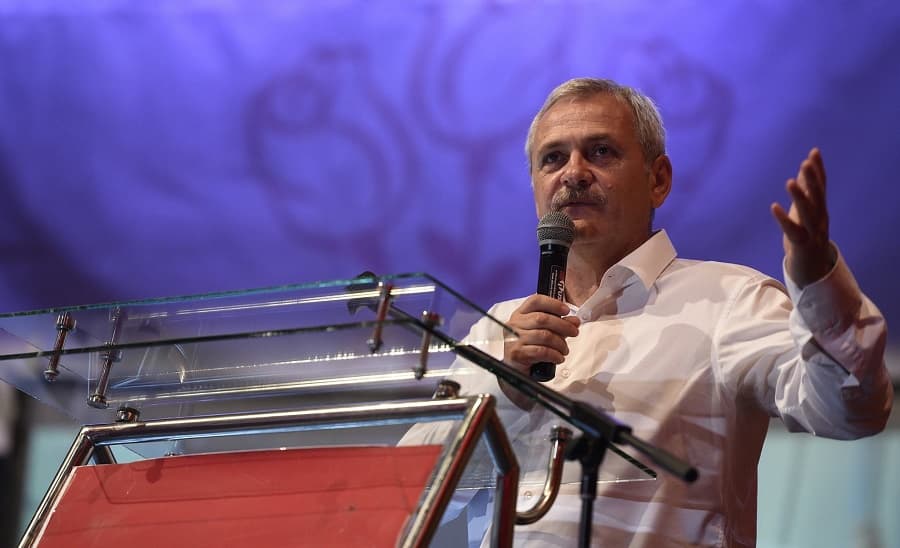
The Social Democratic Party (PSD) may have won the parliamentary elections in Romania, but its leader Liviu Dragnea still has a tough decision to make: who will he nominate for Prime Minister? Most of his colleagues expect Dragnea himself to be the party’s nomination for the position, and the decision would be obvious if it weren’t for his legal problems, which would likely come into question both internally and abroad. However, if he doesn’t go for the job himself, Dragnea has to make sure that the person he goes with will be easily manageable and won’t turn into his competitor within the party. Liviu Dragnea is the man of the moment in Romania and a hero for his party. He took the helm of his party in July 2015, after former leader Victor Ponta withdrew due to his legal problems. Ponta, who had lost the Presidential elections in November 2014 to Klaus Iohannis, was on a downtrend but kept his Prime Minister seat. Meanwhile, PSD members saw Liviu Dragnea as the man who could best shape up the party’s future. Hence, they elected him leader in October 2015. Little did it matter that Dragnea had legal problems of his own. He had stepped down as deputy prime minister and minister of regional development, in May 2015, after a local court found him guilty of electoral fraud in the 2012 referendum for dismissing former President Traian Basescu. In September 2015, PSD’s score in the polls was only 35%. At that time, the National Liberal Party (PNL) was credited with 42% of the intended vote. Then came October 30 and the Colectiv club tragedy, which seemed to hit PSD even further. People went to the streets in Bucharest and other big cities protesting against the corrupt political class that had ruled Romania in the 25 years that had passed since the 1989 Revolution. They asked for the Government’s resignation. At that time, Dragnea made an inspired move. He cut his losses by letting Victor Ponta go (Ponta was not really willing to resign at that time, as he didn’t consider himself responsible for Colectiv and knew that it was likely that he would lose everything). Then, PSD played nice and unconditionally accepted President Klaus Iohannis’ proposal for a technocrat government with a one-year mandate, whose main task was to prepare the local and parliamentary elections in 2016. At first, PSD supported the Government led by Dacian Ciolos, but along the way started behaving like an opposition party while the National Liberal Party (PNL) was perceived as the Government’s main supporter. Thus, PSD started capitalizing on the Government’s failures while PNL was paying the bill. The fact that