Nature needs a place at the table: Two New Zealanders’ cycling expedition along the Danube highlights the river’s vital role, conservation efforts ‘from source to sea’ | Romania Insider
Nature needs a place at the table: Two New Zealanders’ cycling expedition along the Danube highlights the river’s vital role, conservation efforts ‘from source to sea’
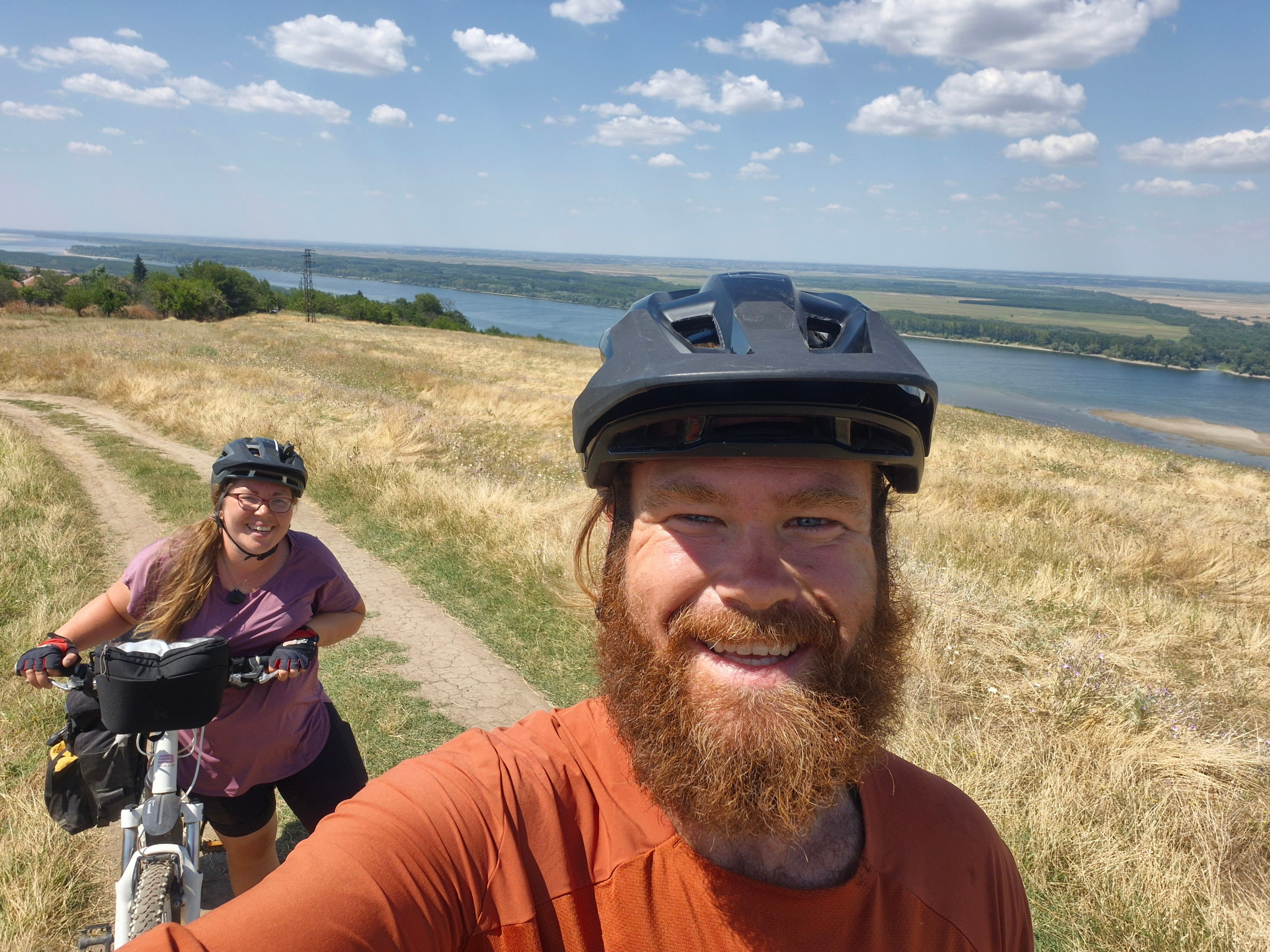
Callum Armstrong and Anna Wentsch undertook a 3,000 km bicycle expedition tracing the length of the Danube, pedaling from its source in Germany all the way to its Delta.
The New Zealand couple in BulgariaPhoto: Callum Armstrong & Anna Wentsch from Conservation Amplified
As Europe endured a summer of severe drought and prolonged heatwaves that have pushed water levels to exceptionally low levels, a New Zealand duo undertook a 3,000 km bicycle expedition tracing the length of the river Danube, pedaling from its source in Germany all the way to its Delta, on the Black Sea. Their purpose: to film a documentary for Conservation Amplified showcasing conservation initiatives in the countries the Danube crosses and what communities in other parts of the world can learn from them.
Callum Armstrong and Anna Wentsch, the co-founders of Conservation Amplified Charitable Trust, set off wanting to find out more about the problems caused by human development along the river and what was being done “from source to sea” to protect nature. “Because we live and breathe conservation in New Zealand, it was just a natural thing to want to find out what's being done along the river,” Anna Wentsch explains.
Anna, who has been living in New Zealand for more than ten years but grew up in Germany, had dreamt of this type of expedition since she was little. As a child, she used to cycle along the Danube with family and friends, but only along a shorter stretch of the river. “I've always wondered what's beyond that point,” she explains.
She proposed the trip to Callum, who enthusiastically joined in, despite knowing little about the river. “When we started researching how much was being done to help nature, but also how many problems had been caused by human development along the river, we thought this was a no-brainer,” he says.
The New Zealand duo in Ostrov, in Constanța County, and in Tulcea
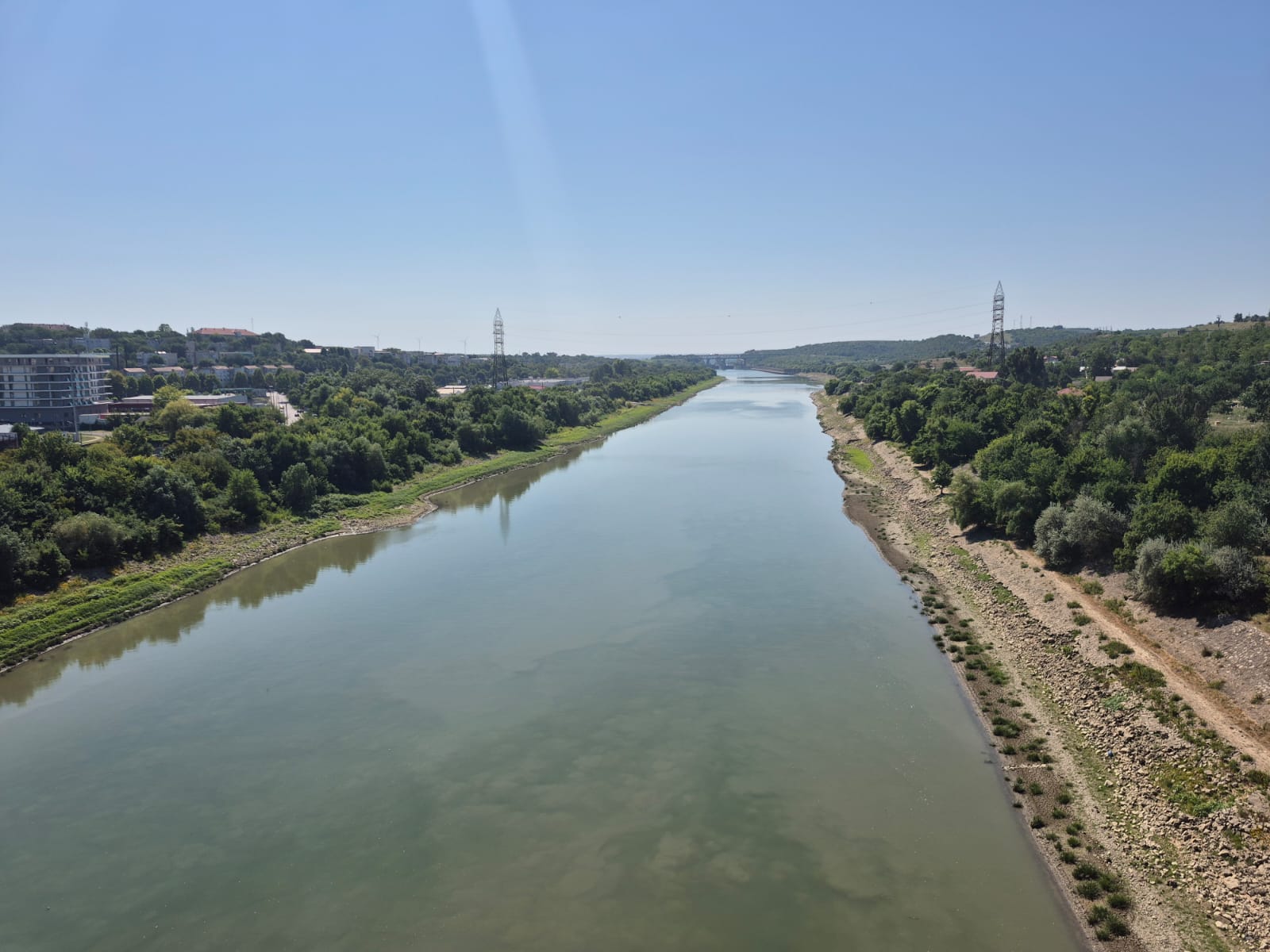
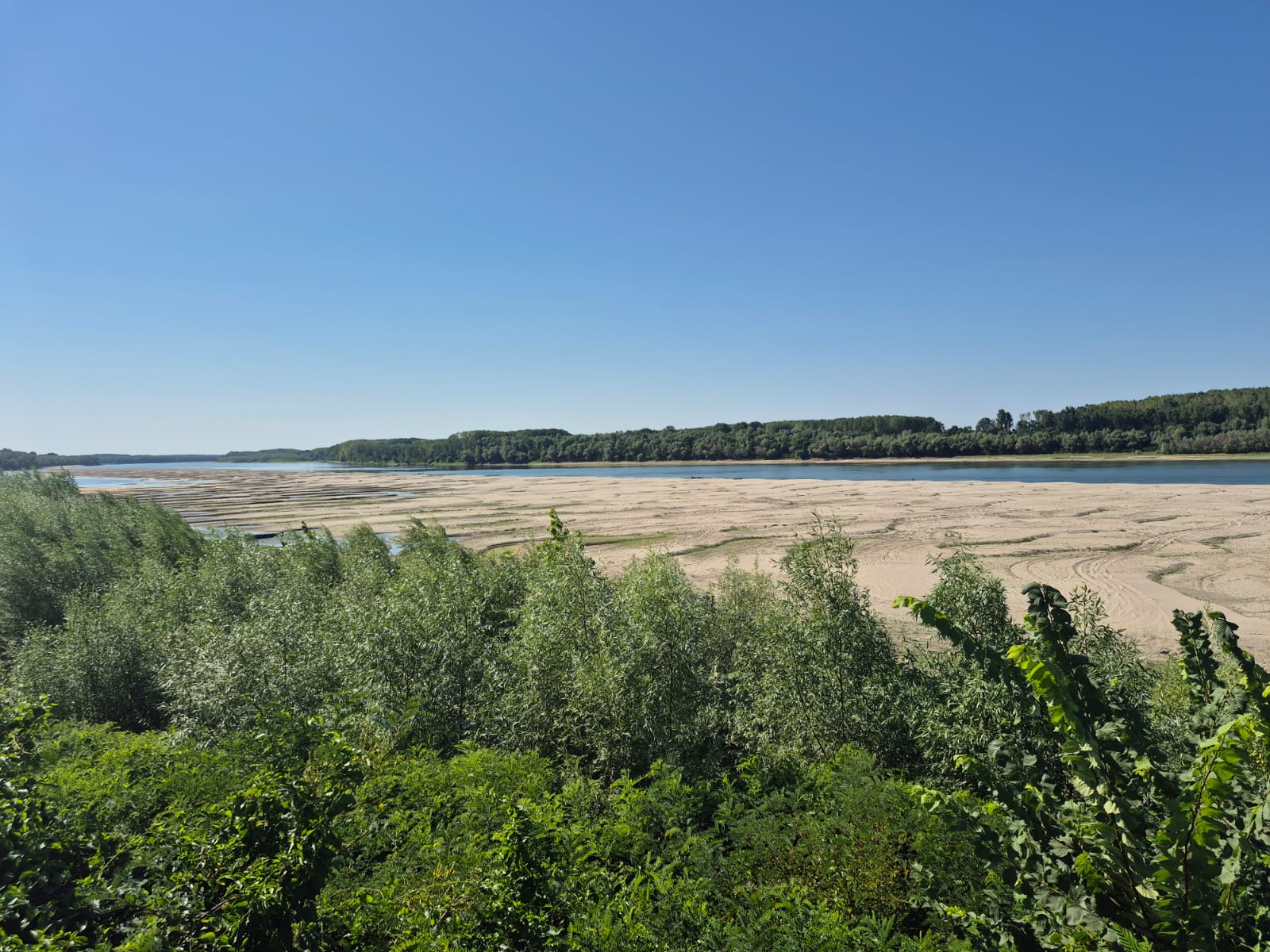
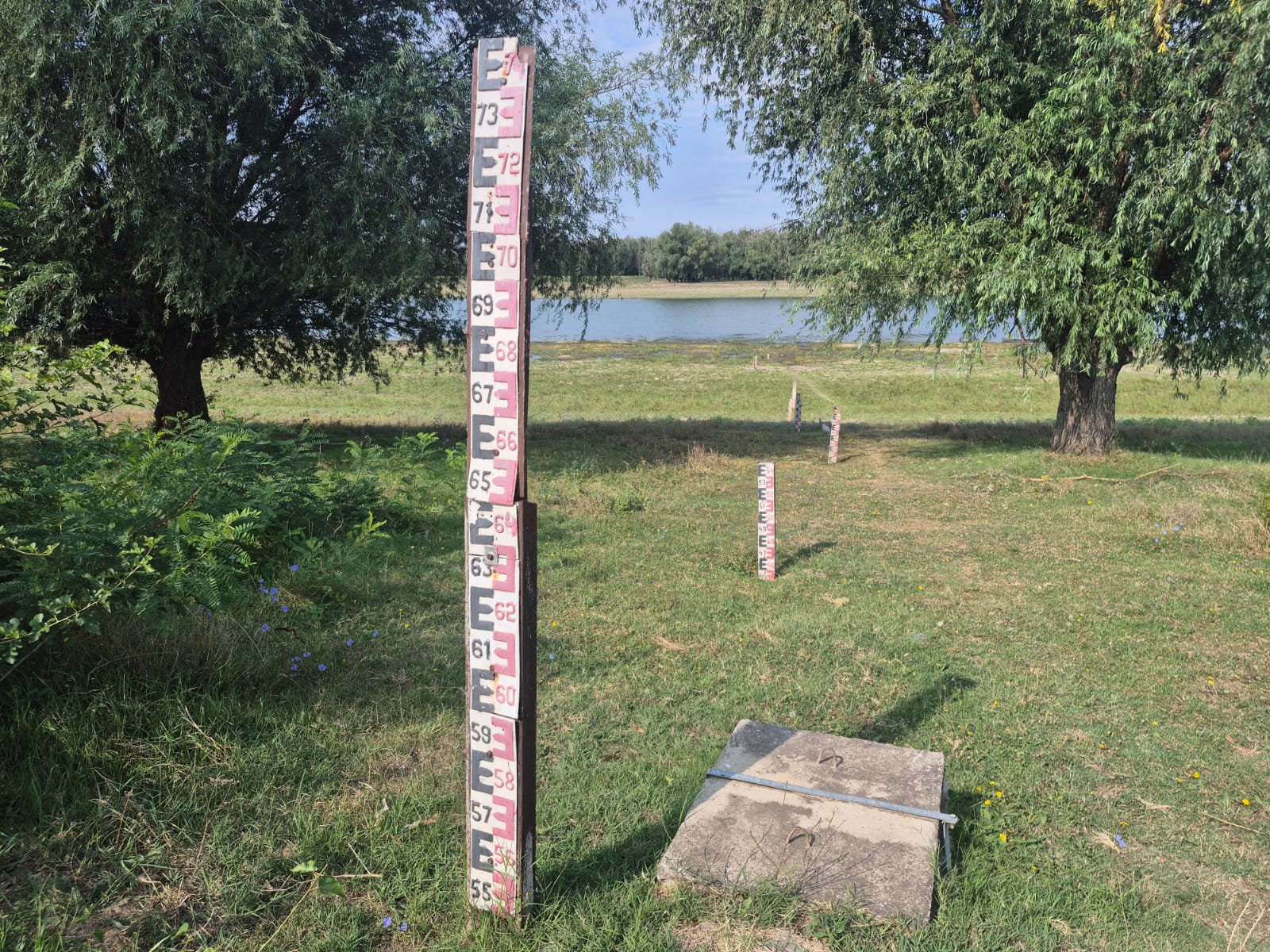
They did not expect their journey to coincide with a major European drought, and this year, the Danube offered a stark backdrop to a journey designed to highlight efforts to protect it. Just as it happened with the Loire, the Po, and the Rhine, the Danube reached record low levels in August as drought had been building up in large parts of Europe since spring, data from Copernicus, the EU’s Earth observation program, showed. In late August, the Danube's flow at the Romanian border fell to around 1,600 cubic meters per second, compared with the multiannual August average of approximately 3,900 cubic meters per second, according to
Free newsletters
Romania, in your inbox before your first coffee.
Get the Daily — the morning briefing, free, in English, unsubscribe anytime. Want business, real estate or travel digests too? Pick your newsletters →
from Romania's National Waters Administration. The low water levels have reduced the width of navigable channels in several sections of the river, forced closures, such as that of Romania’s nuclear power plant Cernavodă, and exposed dry riverbeds and sunken historic relics along the Danube.
The two started their journey in a heatwave in Germany, and as much of Europe sweltered through record temperatures, the extreme heat became a defining theme of their trip, during which they found themselves documenting a river under pressure.
Traveling in temperatures ranging from the mid-30s Celsius to close to 40 degrees meant adjusting their routine: getting up early to cycle in cooler temperatures, taking siestas, and cycling again after 4 - 5 p.m. until close to sunset to avoid getting “cooked” in the middle of the day, as Callum puts it, and planning much of each day’s journey around finding a spring or another source of water.
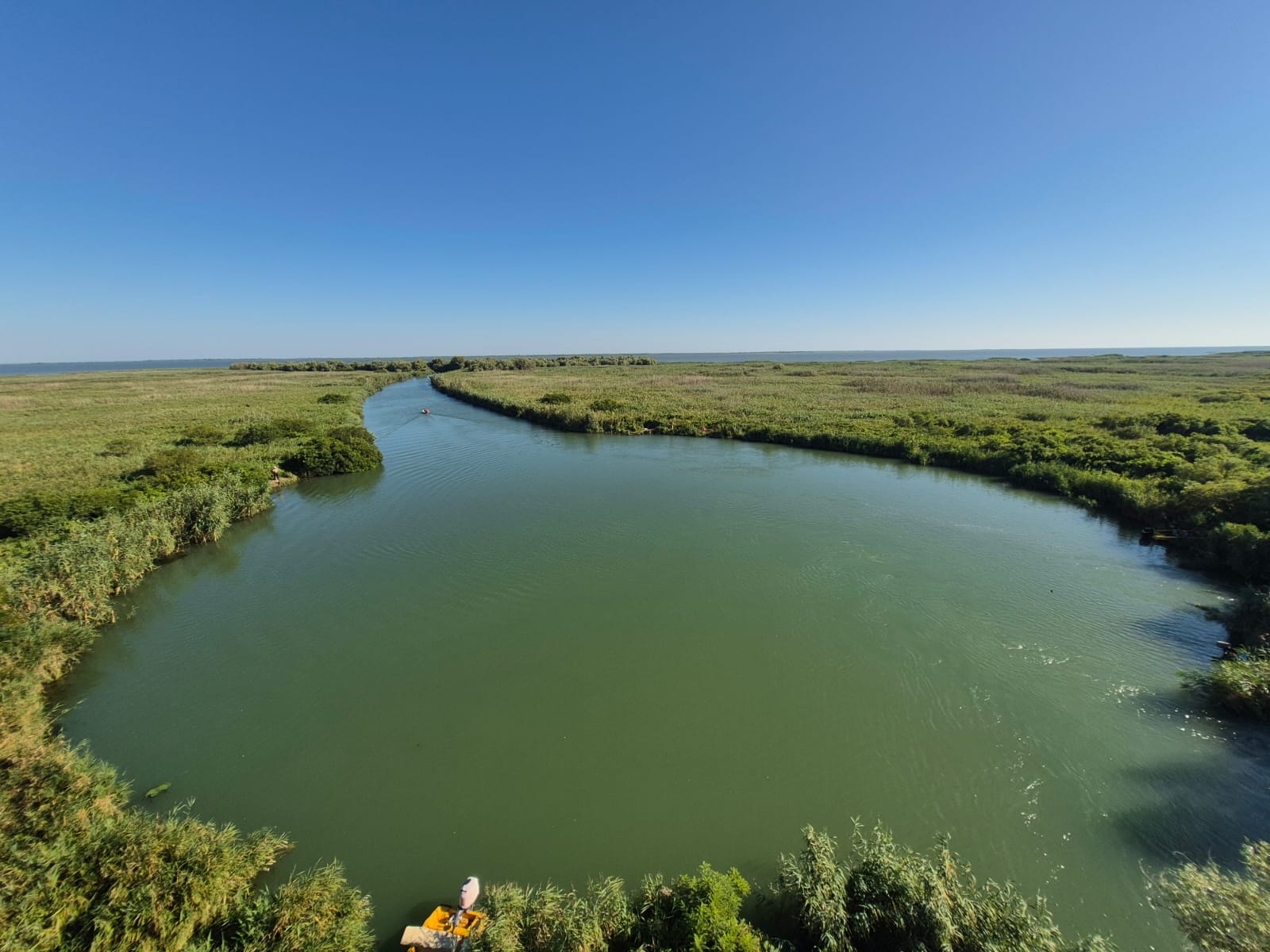
“When we were riding through Romania, it was very low,” Callum recalls. “People we spoke to as we went through the villages said they’d never seen it this low, especially in the side arms of the Danube, where it’s not the main river flow. The thing that really struck me was when we arrived in Tulcea and took the ferry up to Sulina, looking around there, it was just an explosion of nature. You go from this dry, largely agricultural landscape, with villages, towns and cities, to just wild nature. I can feel myself tingling as I say that, just thinking about how beautiful it was.”
When we arrived in Tulcea and took the ferry up to Sulina, looking around there, it was just an explosion of nature. You go from this dry, largely agricultural landscape, with villages, towns and cities, to just wild nature. I can feel myself tingling as I say that, just thinking about how beautiful it was.
“I second that totally. The Delta was absolutely mind-blowing,” Anna adds, pointing to the willingness to help they experienced in Romania, particularly when they were navigating the train journey from Sulina to Bucharest with their bicycles and without speaking any Romanian. Discovering the wildlife along the river was one of the highlights of the expedition for Anna. “You can actually experience it. It’s not just something you read about; it’s actually here,” she says. Beavers in Germany and the white-tailed eagles in the Mura-Drava-Danube Biosphere Reserve were among the wildlife along the way.
It’s one of the perks of cycling rather than driving, which usually encourages one to take the fastest route, she explains. Traveling by bike also opened the door to encounters with the people they met along the way. “No matter where we went, people were nice. They were curious. Some of them were like, ‘You guys are crazy. That’s such a long way to go on a bicycle.’ It was just really nice to meet strangers and have these interactions that I think you don’t get if you’re, for example, traveling in a car,” Anna says.
Amid hand signals, smiles, and Google Translate-mediated exchanges, the encounters were heartwarming, Callum adds. “Being on a bicycle, you see probably a more beautiful version of what people are like because it’s novel. […] But when you’re riding anywhere from 12 to 25 km an hour, you see the fruit on the trees, you see the expressions on people’s faces, you see what they’re doing, you see the kids playing, you see the birds around you, and that’s really beautiful.”
The Danube in Cernavodă on August 11, 2026 Photo: Callum Armstrong & Anna Wentsch, Conservation Amplified
"We often think about protecting the wild areas and forget about the urban areas"
Many of the areas they have seen were marked by the outflow of young people from small towns and villages to other countries in Western Europe where opportunities lie.
“One big thing that really stuck with me is the number of villages in the countryside in Romania and Bulgaria in particular that are becoming underpopulated,” Callum explains, as he looks back to rural communities where there are few opportunities for young people getting smaller, in stark contrast to cities that continue to grow.
While many environmental problems are rooted in the consumption patterns of city dwellers, the activities supporting that demand, from energy production and agriculture to transportation, take place in rural areas and small towns, creating a disconnect between where consumption and decision-making are concentrated.
“The challenges and the problems that we face in our environment come largely from human consumption. We need electricity for all different uses, which comes from nuclear plants, like the one that has closed at Cernavodă, it comes from hydropower. Our food comes from agriculture; our supply chains come from trucks that are driving. All this activity happens in the countryside, in the small towns, in the natural areas. But the consumption, the money, the decision-making, and the thoughts of the people, especially the young people who are the future, are in the cities. So, a big lasting impression from me, as an environmentalist, is that we often think about protecting the wild areas and we often forget about the urban areas. But ultimately, we need to spend more time and attention on these urban areas because that's where the hearts and minds are, and the resources,” Callum says.
The side branch of Rasova on August 10 Photo: Callum Armstrong & Anna Wentsch, Conservation Amplified
One river, many challenges
As they followed the Danube downstream, the two found varied projects addressing challenges facing the river. In Germany, where the river has been straightened for ship passage and dams have been constructed, work around Neuburg and Ingolstadt focused on creating fish bypasses, reconnecting the river with the floodplains, and restoring more natural groundwater levels.
Further down towards Hungary and along the Duna-Drava, where the river had again been straightened, they explored efforts to protect oxbow lakes, remains of the bends of the river that have become isolated, but remain vital refuges for wildlife.
In Austria’s Donau-Auen National Park, which preserves the last great floodplain landscape in Central Europe on an area of more than 9,600 hectares, they looked at education efforts to disseminate environment-related topics.
In Croatia, they visited Kopački Rit Nature Park, located in the corner formed by the river Danube and its tributary Drava and home to the white-tailed eagle but also numerous waterfowl birds and the common deer. “It holds so much incredible wildlife beyond the eagles. The eagles are at the top of the food chain. So, having a good population that's healthy at the top of the food chain means that everything else is in a fairly good balance because otherwise that couldn't happen,” Anna explains.
Meanwhile, in Serbia, they looked at how conservation work can be a voice at the table of decisions alongside industry through the example of Vojvodinašume, which manages both protected natural resources and activities such as the production of forest seed and planting material, agriculture and tourism. Further downstream, they stopped at Djerdap National Park, also in Serbia, one of the few areas where a lot of big mammals live close to the river because of all the forests that surround it. “They took us up a viewpoint which was absolutely stunning seeing the Danube from,” Anna recalls.
In Bulgaria, they visited Persina Nature Park, home to more than 700 higher plant species and 1100 animal species, including Dalmatian pelicans and other wildlife.
Peceneaga, Tulcea County, on August 13 Photo: Callum Armstrong & Anna Wentsch, Conservation Amplified
From there, they arrived in Romania, where they looked at the work being done by Rewilding Europe as part of the organization’s cross-border Danube Delta program. On the Romanian side, Rewilding Europe and the Taurus Foundation established a Tauros cattle natural-grazing program in Sfântu Gheorghe, with animals brought there in 2015 and 2017. Meanwhile, Rewilding Ukraine’s work in the Delta covered the release of water buffalo and Konik and Hutsul horses. Alongside the Tauros cattle, these are semi-wild or domestic natural grazers that help restore ecological processes. The Ukrainian side of the Delta also saw the reintroduction of the wild herbivores red deer and fallow deer. Some of these have also crossed naturally into the Romanian side of the Delta.
A snapshot of Sulina Photo: Callum Armstrong & Anna Wentsch, Conservation Amplified
“A river is a lifeline”
Over the coming period, the Bay of Plenty-based duo will work on producing and publishing their documentary, while continuing their work running local conservation and community campaigns, and mobilizing people to support conservation causes.
“It's a small group of people that are actually doing this, and we're in an echo chamber where we only really talk to ourselves, and we don't speak outside of our community. We want to get more of our local community taking action and making this part of their identity,” Callum says.
A river is a lifeline. It's more than just a shipping route or a way to draw our energy from. It's a lifeline, but that's true for both the wildlife as well as for humans.
As they reflect on the journey, Anna highlights the essential role rivers play and the responsibility humans have to protect them. “A river is a lifeline. It's more than just a shipping route or a way to draw our energy from. It's a lifeline, but that's true for both the wildlife as well as for humans. […] It is literally supporting us with the essential need we all have, which is fresh water. Humans, having our amazing brains and being able to make our own decisions based on our amazing brains more so than any other wildlife, we have a big responsibility to ensure that the lifeline remains a healthy lifeline for us and the wildlife. I think that's the big lesson there. And that's worldwide because rivers are everywhere.”
Moreover, environmental considerations need to be part of decision-making from the outset, Callum argues. “The environmental damage that's causing the need for a lot of these large investments in protecting nature has come because humans have seen the river only through our needs, without thinking about the environment. The best takeaway is that humans need electricity, food, and all these other things, but that needs to be done with nature in mind. If we make decisions without nature at the table, we will regret it and spend a lot more money in the future fixing our mistakes. We can still have what we need, but it needs to be one of the key stakeholders, not just an afterthought.”
To get notified about when the documentary goes live you can register here.