Talks for broad ruling coalition in Romania stagnate, minority cabinet becomes an option
The negotiations among the four main pro-Western parties in Romania, carried out in Bucharest without the presence of president Nicusor Dan for the past two days, failed to reach even limited agreement on the ruling strategy primarily on…
iulian ernst · Journalist
· Updated · 3 min read
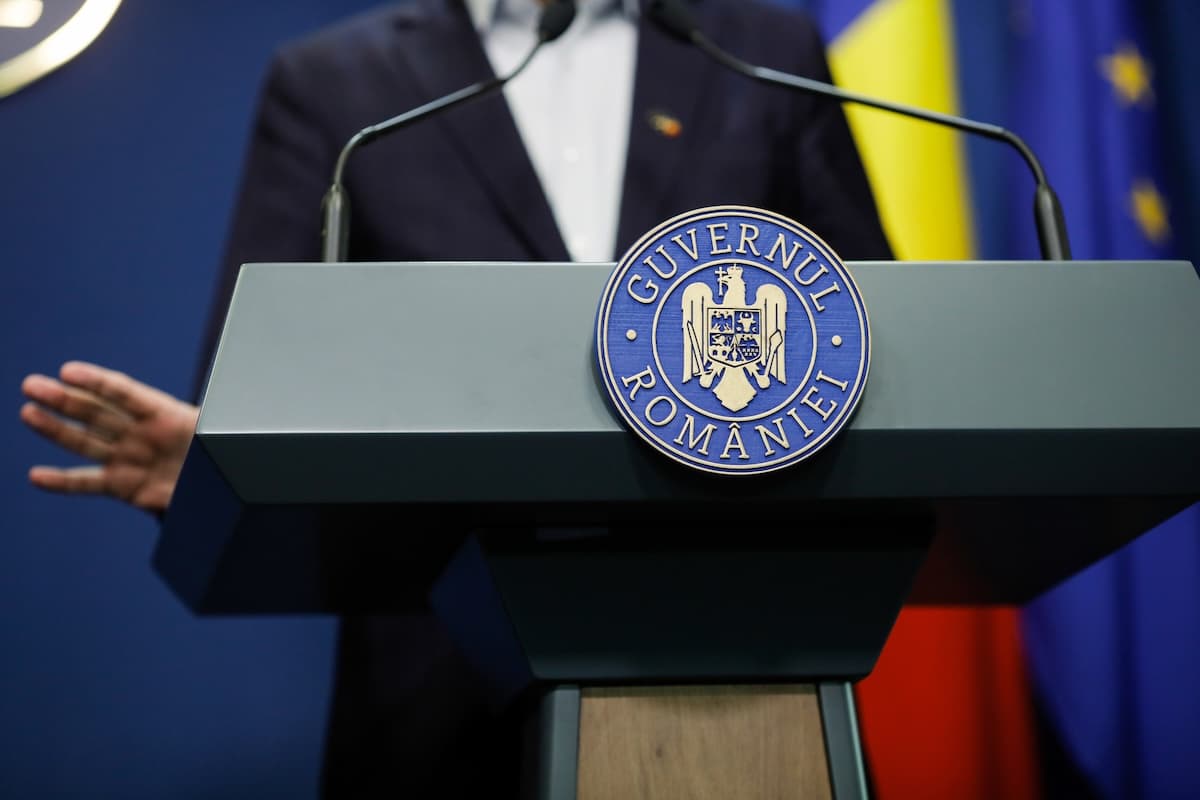
The negotiations among the four main pro-Western parties in Romania, carried out in Bucharest without the presence of president Nicusor Dan for the past two days, failed to reach even limited agreement on the ruling strategy primarily on the fiscal consolidation package amid radical requests expressed by the Social Democratic Party (PSD) that indicate an exit strategy. The scenario of a minority cabinet without the Social Democrats emerges as increasingly possible, even if president Dan expressed more optimistic views from Odessa, where he attended a regional security meeting.
Fundamental divergences between the radical reformist party USR, which proposes traditional neoliberal reforms, at least according to the public rhetoric of its economic experts such as Claudiu Nasui, and the so-called "solidarity tax" required by the Social Democrat PSD as a bridge towards progressive taxation, make the four-party ruling coalition nearly impossible.
Under the so-called "solidarity tax" proposed by PSD, the gross wage earnings above RON 10,000 or RON 12,000 (EUR 2,000-2,400) would be subject to a higher income tax (16% or 20%, compared to the 10% current income tax in Romania), Hotnews.ro reported. This would be a first step towards full progressive taxation to be introduced as soon as the legal and technical mechanisms make it possible, according to PSD.
The special tax looks, however, like an exit strategy for the Social Democrats, who have never ruled out the option of remaining in opposition. The Concordia association of employers estimated the impact of the tax at 0.2% of GDP – irrelevant for the 2%-of-GDP gap that Romania must close this year.
Although the argument for progressive taxation of global income (and not only wage income) makes sense in the European context and particularly given the wide income disparity in Romania, it is not likely to address the urgent need for supplementary budget revenues and the Social Democrats’ current leadership is not morally entitled to advocate for such an option.
In fact, the lack of reforms within the Social Democratic Party (as we mentioned before) is a key element that drags the formation of a broad pro-Western ruling coalition. This is partly relevant for the National Liberal Party (PNL) and Save Romania Union (USR) to a lower extent, as the two parties also insist on outlining past ministers for the new government despite their disappointing performances: Adrian Caciu (PSD), Marcel Bolos (PNL), or Cristian Ghinea (USR) to name only three.
Despite the sluggish and ambiguous development of the negotiations, president Nicusor Dan, expected to join the talks on June 12, expressed optimistic views. However, he indicated June 30 as the deadline for the fiscal corrective package – while the European Commission will draft recommendations for the European Council on June 20. In fact, the fiscal corrective package should be endorsed by a new government within a week.
Free newsletters
Romania, in your inbox before your first coffee.
Get the Daily — the morning briefing, free, in English, unsubscribe anytime. Want business, real estate or travel digests too? Pick your newsletters →