Romania’s Liberal Government falls after no-confidence motion. What comes next?
Romania’s Parliament passed a no-confidence motion against the Liberal Government led by prime minister Ludovic Orban on Wednesday, February 5, only three months after being invested. The motion initiated by the Social Democratic Party…
Romania Insider · Journalist
· Updated · 3 min read
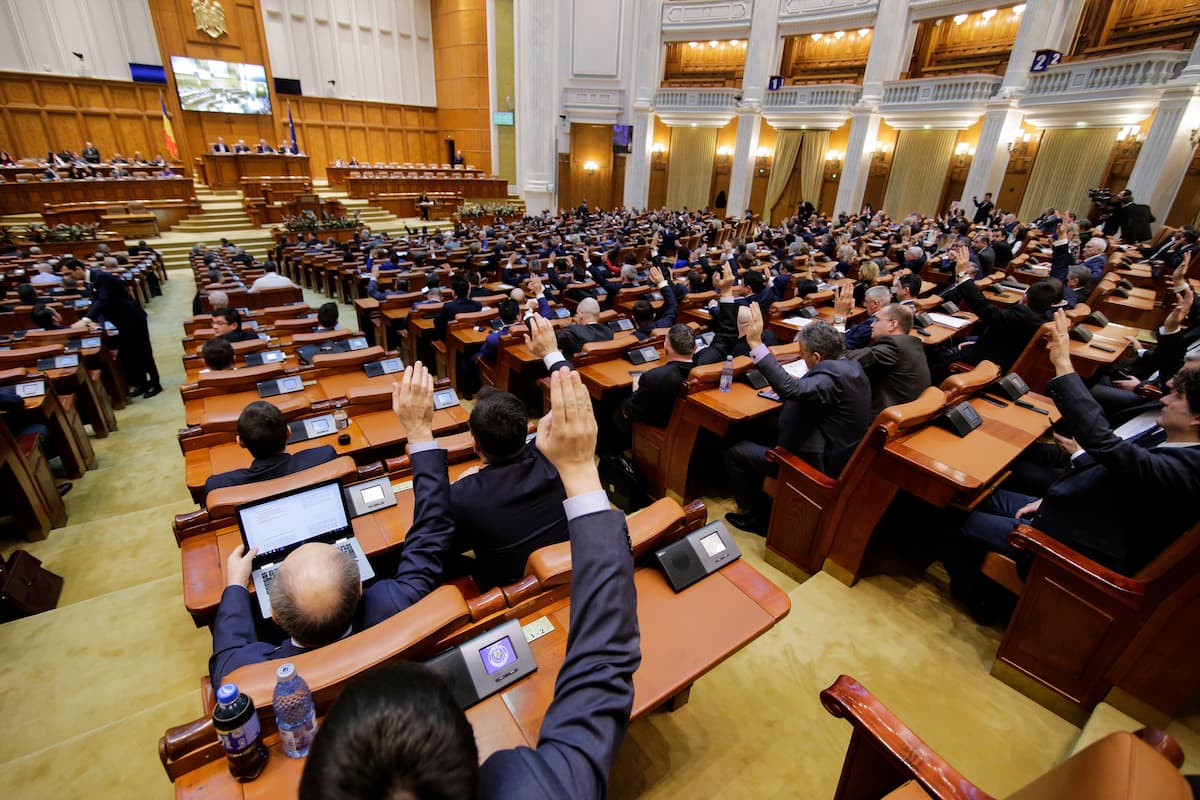
Romania’s Parliament passed a no-confidence motion against the Liberal Government led by prime minister Ludovic Orban on Wednesday, February 5, only three months after being invested. The motion initiated by the Social Democratic Party (PSD) was supported by 261 MPs, more than the minimum 233 votes required for it to pass.
PSD filed its no-confidence motion after the Government took responsibility in the Parliament for a bill that changes the electoral law so that mayors get elected after two rounds of vote instead of one. The PSD and the ethnic Hungarian party – UDMR oppose this change that could potentially reduce their number of mayors in the local elections to take place this summer.
Some commentators believe that the Liberals passed this change to the electoral law with the exact purpose of having their government overthrown and trigger early parliamentary elections. The National Liberal Party (PNL) currently records its highest score ever in the polls, of over 47%, while the Social Democratic Party (PSD) is only at 20%, according to the most recent IMAS survey carried out for Europa FM radio station.
Moreover, prime minister Ludovic Orban and president Klaus Iohannis had a meeting in January after which they announced they decided in favor of triggering early elections. However, for this, they first needed the Government to resign or be dismissed.
The second step is to have the Parliament reject two new government formulas. Only after that, the president can dissolve the Parliament and snap elections are organized. The Liberals said recently that early elections could be organized in the same period as local elections.
Liberals changed election regulations by emergency ordinance the day before the motion
On February 4, one day before the vote on the no-confidence motion, the Liberal Government adopted an emergency ordinance that brings important changes to the way parliamentary elections are organized. One of the most important changes is reducing the legal term for announcing the elections from 90 days to 50 days, although the Constitution provides a 3-month period for organizing the elections, according to G4Media.ro.
Another change is allowing people to vote in any precinct in the country, not only in those where they are registered. Some parties objected to this change saying that it opens the way for electoral tourism, according to
Free newsletters
Romania, in your inbox before your first coffee.
Get the Daily — the morning briefing, free, in English, unsubscribe anytime. Want business, real estate or travel digests too? Pick your newsletters →