Report: 1 in 4 Bucharest residents would be affected following a major earthquake
One in four Bucharest residents would be affected following a major earthquake, be it loss of life, loss of a relative or acquaintance, loss of shelter or job, and so on, according to estimates from the Department for Emergency Situations…
Radu Dumitrescu · Journalist
· Updated · 4 min read
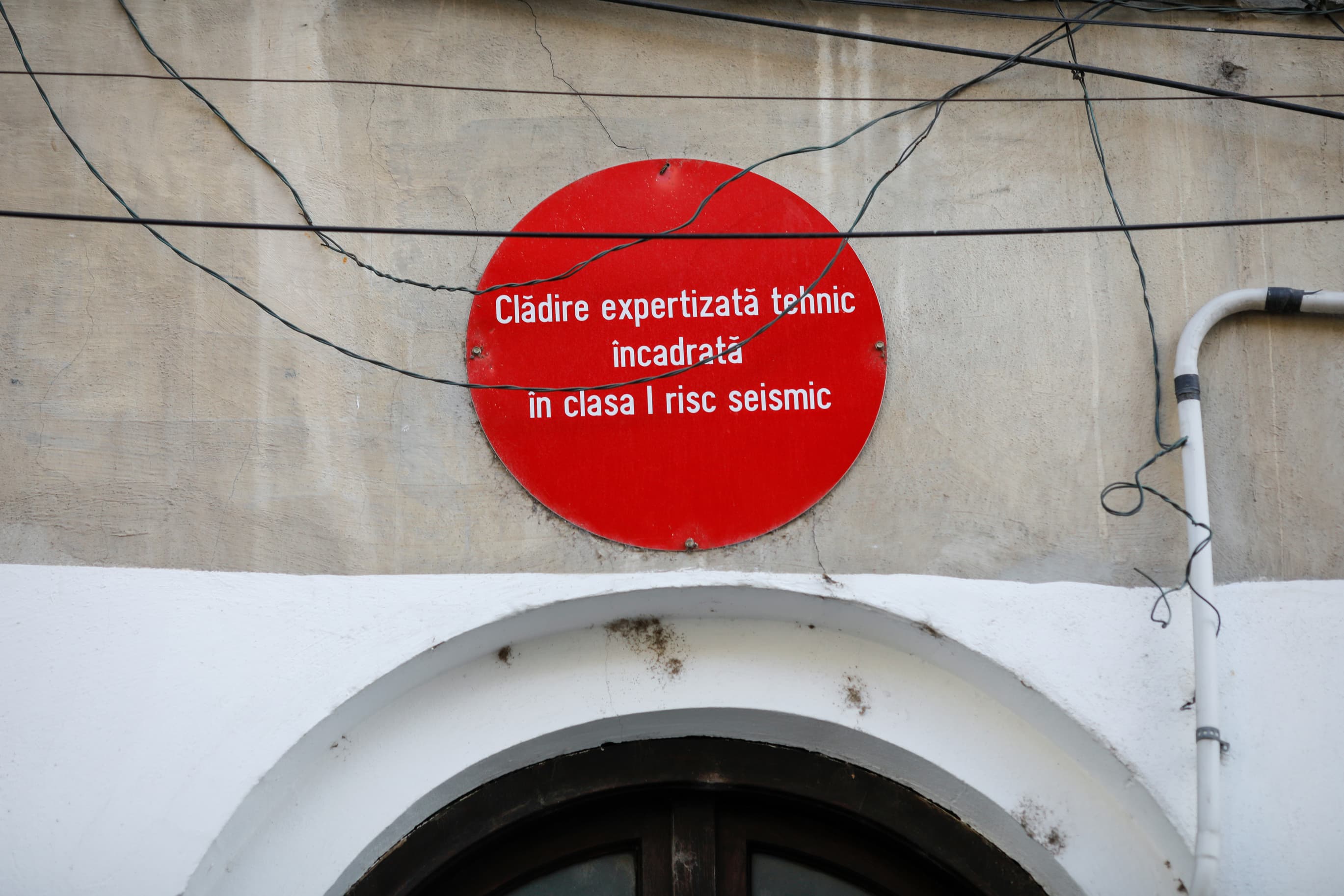
One in four Bucharest residents would be affected following a major earthquake, be it loss of life, loss of a relative or acquaintance, loss of shelter or job, and so on, according to estimates from the Department for Emergency Situations analyzed by the Bucharest Community Foundation. In this context, the non-profit launched the “Your CTRL Plan” campaign on March 1, which provides action models at a time when the devastating 1977 earthquake is being commemorated.
March 4 marks 47 years since the earthquake with a magnitude of 7.2 on the Richter scale, which occurred on March 4, 1977. Felt across Southeast Europe, the quake caused the greatest damage from a natural phenomenon in Romania's history: nationally, 1,578 people lost their lives (1,424 in Bucharest), and 11,321 people were injured (7,598 in Bucharest). Over 30 tall or medium-height buildings collapsed in Bucharest. Overall, roughly 200,000 people were affected directly, according to Digi24.
Romania is a country with high seismic potential, and an earthquake with a magnitude of 7 is possible at any time. The Vrancea seismic zone is the most active in the country, but in the past, strong earthquakes also occurred in the Black Sea. The strongest earthquake in Romania's history occurred in 1802, in the Vrancea zone, at a depth of 160 kilometers.
The Bucharest Community Foundation draws attention to the urgent need to put individual preparedness on the public agenda as a tool to increase the resilience of the Bucharest resident population to earthquakes. The Foundation proposes to popularize best practices for public preparedness and rescuer safety used in other earthquake-vulnerable countries.
By comparison, Istanbul has prepared more than 450,000 people with disaster response training. Italy’s Civil Protection Department has trained more than 400,000 people with volunteers over five years.
“We cannot expect that after the earthquake, after the golden hour has passed, the institutions will be working properly. There will be 100 organizations providing water and none providing biscuits, things will be almost the same. But less like the pandemic, and less like the Ukraine crisis. It will also happen in the case of the earthquake, it will also happen in Bucharest,” said Cosmina Simiean, head of the General Directorate of Social Assistance of the Municipality of Bucharest (DGASMB).
The campaign continues with a demonstration exercise in schools during the week of March 4-8. 20 schools in Bucharest will open their doors to trainers from the Association for Education, Development and Youth Involvement - E.D.I.T. who will instruct 2,000 students on the correct behavior before, during, and after an earthquake.
Free newsletters
Romania, in your inbox before your first coffee.
Get the Daily — the morning briefing, free, in English, unsubscribe anytime. Want business, real estate or travel digests too? Pick your newsletters →