Union leader: Most young researchers at Romania’s Măgurele laser are looking for jobs abroad
Some 80% of the young researchers working at the high-power laser installed at Măgurele, near Romania’s capital, send their resumes to employers abroad, George Epurescu, the vice-president for Scientific Research of the Hermes Trade Union,…
RI Newsroom · Journalist
· Updated · 3 min read
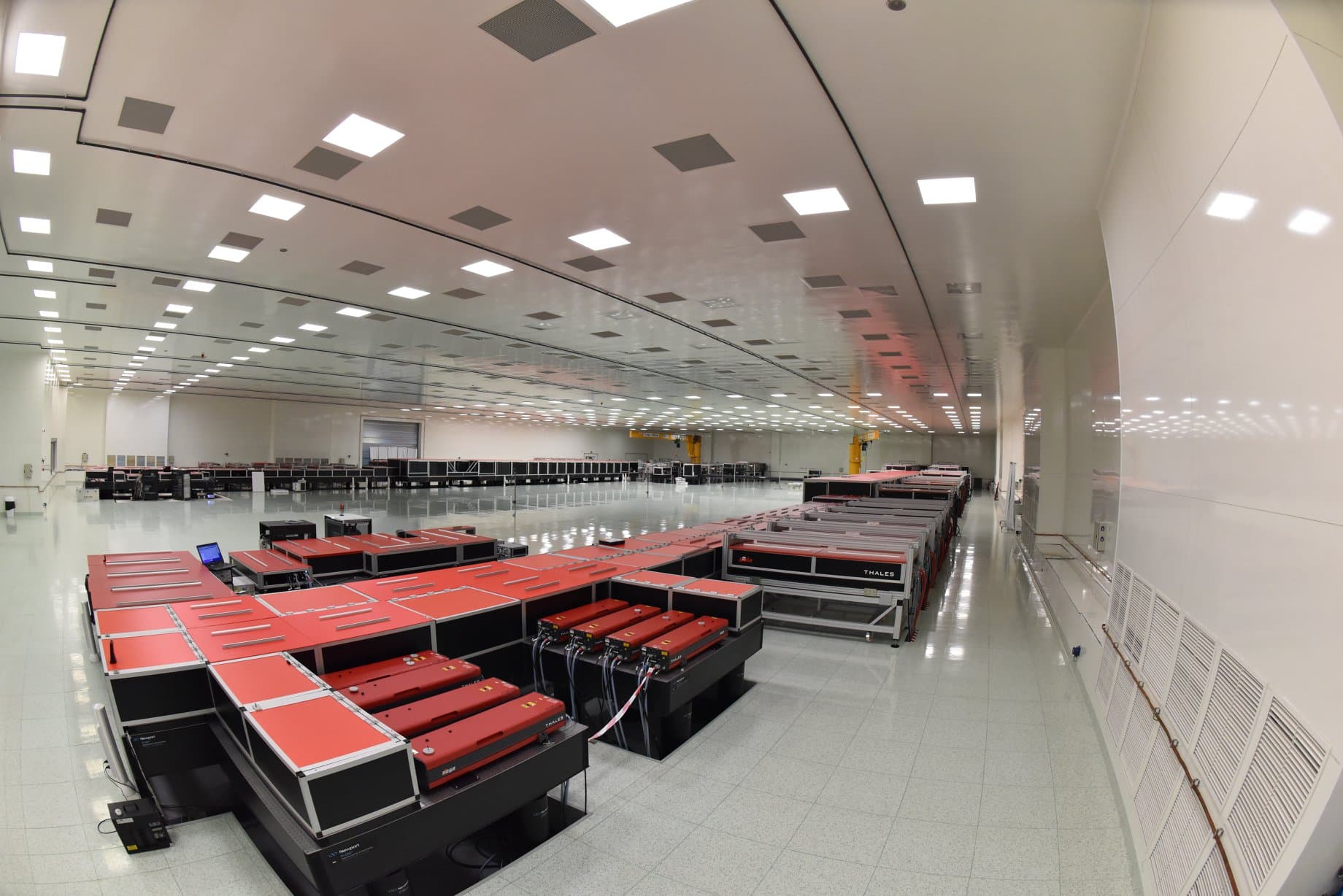
Some 80% of the young researchers working at the high-power laser installed at Măgurele, near Romania’s capital, send their resumes to employers abroad, George Epurescu, the vice-president for Scientific Research of the Hermes Trade Union, told Agerpres.
He made the comment at the end of the protest the union organized on Wednesday, August 5. Dozens of employees of the Horia Hulubei National Institute for Research and Development in Physics and Nuclear Engineering (IFIN-HH) and of the Măgurele laser lab have asked the Education Minister to take a stand on the management style of the IFIN-HH leadership.
The Horia Hulubei National Institute for Research and Development in Physics and Nuclear Engineering (IFIN-HH) implements the Extreme Light Infrastructure – Nuclear Physics (ELI-NP) project, known as the Măgurele laser project.
The Măgurele laser project was meant as one of the three pillars of the pan-European project Extreme Light Infrastructure (ELI), dedicated to the investigation of light-matter interactions at highest intensities and shortest time scales. Complementary research facilities are located in the Czech Republic and Hungary.
In May, the ELI Delivery Consortium announced that the Czech Republic and Hungary, together with Italy and Lithuania, have formally applied to the European Commission to establish the new, pan-European organization known as the Extreme Light Infrastructure ERIC (ELI ERIC). The United Kingdom has confirmed to join as a founding observer. Romania was not included in the project.
Romania reacted to the decision arguing the project will not have the same scientific and technical results without the local component. “Applying for the second phase without ELI-NP is first of all unjustified, both legally and ethically, and strongly affects Romania’s interests,” the Romanian side said at the time, G4media.ro reported.
Now, Epurescu told Agerpres the protesters called for an end “to the abuses of the IFIN-HH director Nicolae Zamfir.” He argued that the IFIN-HH management uses short-term employment contracts to prevent unhappy employees from speaking out. “If you speak out, they don’t renew your contract, which is for one or two years,” Epurescu said.
Free newsletters
Romania, in your inbox before your first coffee.
Get the Daily — the morning briefing, free, in English, unsubscribe anytime. Want business, real estate or travel digests too? Pick your newsletters →