Romanian universities join consortia aiming to establish European universities
Two Romanian universities have recently joined consortia aiming to establish European universities, “networks of universities across the EU”, which allow students to obtain a degree by combining studies in several EU countries.<o:p></o:p>
RI Newsroom · Journalist
· Updated · 3 min read
Two Romanian universities have recently joined consortia aiming to establish European universities, “networks of universities across the EU”, which allow students to obtain a degree by combining studies in several EU countries.
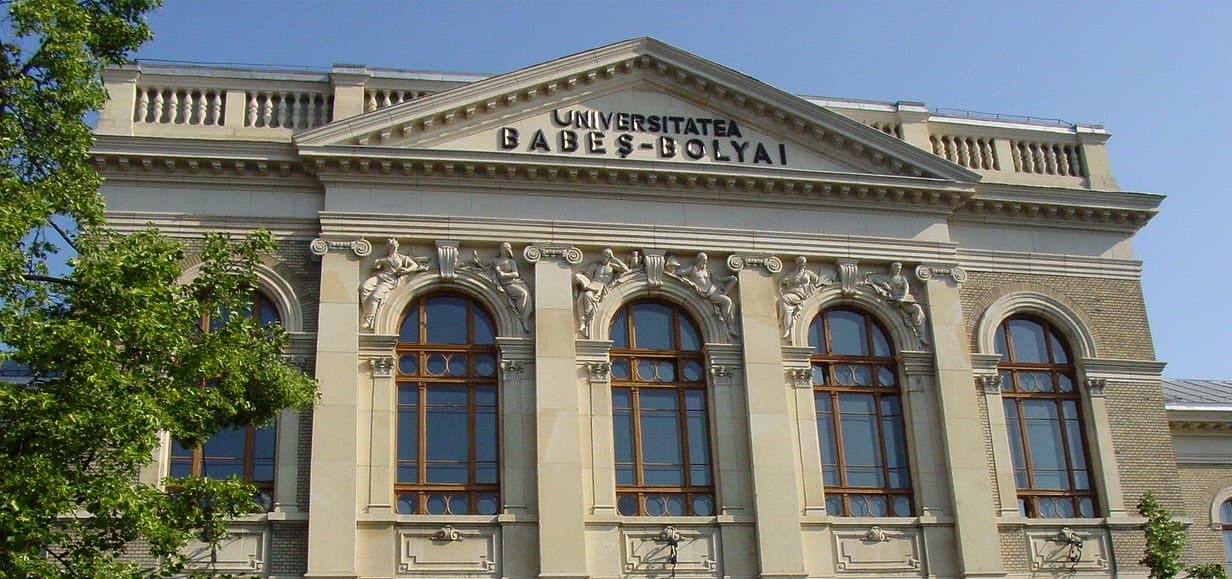
Babeș-Bolyai University (UBB), a public university in western Romania’s Cluj-Napoca, has become a member of the European consortium InclusU.
The other members of the consortium are: University of Lille (France), Malmö University (Sweden), Mykolas Romeris University in Vilnius (Lithuania), University of Minho (Portugal), Roma Tre University (Italy), and University of Wroclaw (Poland).
The consortium has already submitted the project to the European Commission. The financing request to implement this is of EUR 5 million, in a first phase, Daniel David, the prorector of UBB, told Edupedu.ro.
The University of Lille is the administrative coordinator of the alliance, established on February 20 in Brussels. The alliance is part of the European Universities Initiative, aimed at “strengthening strategic partnerships across the EU between higher education institutions and encouraging the emergence by 2024 of some twenty European Universities.”
A European university is an alliance of higher education institutions covering a broad European geographic scope, having a long-term strategy focused on sustainability, excellence and European values, and offering student-centered curricula jointly delivered across an inter-university campus.
For the 2019 call, funding of EUR 60 million is available to twelve experimental models to test the concept and its potential.
InclusU gathers both traditional and newer universities, from all parts of Europe, from capital cities, border cities or dynamic cities, from richer or less developed areas. It adopts values such as inclusiveness; civic-mindedness, aiming to support the training of active citizens who contribute to a knowledge-based society; openness, in relation to society; and quality, aiming for excellence in research, teaching, and in relation to society.
“The European consortium will be an integrated one, where everything will be more flexible. For instance, if we have a psychology course, but the same course is also held at the University of Vilnius, our students can chose where they take the course. The idea is to teach the young that they are European citizens, that they can actually go to another university in Europe, where they can feel at home,” David told Edupedu.ro.
Free newsletters
Romania, in your inbox before your first coffee.
Get the Daily — the morning briefing, free, in English, unsubscribe anytime. Want business, real estate or travel digests too? Pick your newsletters →