Sally Wood-Lamont discovers the secret to an independent life for Romania's people with disabilities
A descendant of the Highland Scottish clan Lamont lives in Cluj-Napoca, north-western Romania, and battles for the rights of disabled people. Her name is Sally Wood-Lamont. With a strong Scottish accent, Sally Wood-Lamont starts telling…
Diana Mesesan · Journalist
· Updated · 7 min read
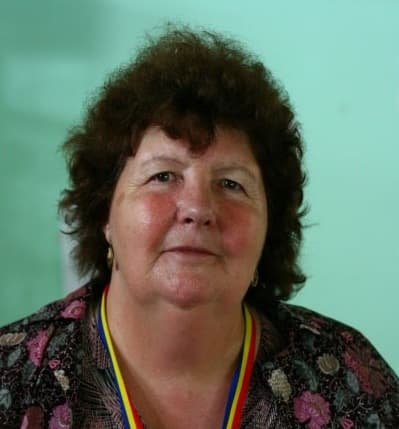
A descendant of the Highland Scottish clan Lamont lives in Cluj-Napoca, north-western Romania, and battles for the rights of disabled people. Her name is Sally Wood-Lamont. With a strong Scottish accent, Sally Wood-Lamont starts telling her story over Skype. It’s mid-November, and she is taking part in the International Paralympic Committee in Mexico as representative of Romania. We have managed to plan an interview via Skype despite the 7-hour time difference between Romania and Mexico. “I got involved with Romania in 1990. I’m a librarian by profession,” says Sally. She speaks clearly and distinctly. It’s how she learned to pronounce the words in her teen years. Growing up with a mother who became deaf after 35, Sally understood she didn’t have to shout, just say every word clearly. When Sally would go out with her mom, people would turn and talk to the daughter, as if the mother was invisible. She would tell them every time that her mother was deaf, not stupid, and she spoke seven languages. Decades laters, Wood-Lamont’s combative attitude isn’t different. She leads the Romanian Paralympic Committee, and has managed to bring Romanian athletes to the Paralympic Games in Beijing, London, and hopefully, in Rio de Janeiro, next year. “People with physical disabilities are not very much different from you or me,” Sally explains. They may not have a leg, an arm, but they’ve got a brain, and they are very able to live like you. There is no difference.” For Sally, this is obvious, but for a big part of the Romanian society, disability means more than just a leg or an arm missing. Romania’s existing education system is segregated, and children with a disability don’t attend public schools, reads a report by Philip Alston, United Nations Human Rights Council Special Rapporteur, after his visit in Romania, in November 2015. People with disabilities also face a variety of challenges in employment and housing. “I noticed that a lot of NGOs treated these people like children,” says Sally. “That’s how they called them, ‘copii’. They weren’t children. They weren’t growing up and they weren’t learning how to grow up, they were always supervised by other people like they were disabled not only physically but also mentally.” But Sally Wood-Lamont discovered one of the best and easiest way of integration: sports. The Highland Scottish hockey player Sally Wood-Lamont’s family are from the Lamont Clan, a Highland Scottish clan that ruled for centuries almost all of the Cowal region, in the west of Scotland. Her grandfather was a minister of Coldingham, a village on the East Coast of Scotland, from 1897 to 1952, when he moved to Edinburgh. Despite the legend-like family history, Sally’s childhood wasn’t fairyland. Her mother, who worked as a teacher until she lost her hearing, was a single parent and didn’t have much money. After she had become deaf at 35, she continued to give private lessons. She spoke six foreign languages and could teach all of them. “A very eccentric but very normal person,” Sally says laughing. She loved reading biographies and telling stories. In primary school, Sally was the biggest in the class and wore a fringe, which was her hallmark as a child. She was good in all sports, but never the best, Sally says. The height of her career was when she became part of the school’s first hockey team. Sally was the goalkeeper. The hockey adventure ended when she was 14 and a half. She didn’t have a lot of money, so she had to find a job. Sally worked in a store on Thursday evenings and Saturdays, and that clashed with all the matches that she would do in hockey or volleyball. “I couldn’t ask mom for money for myself, so I had to be independent from a very early age,” she says. Now she teaches young adults with disabilities how to become independent through sports. She didn’t plan to work in the field of disability or to move to Romania. Everything happened naturally.