Partner Content

Beyond the classroom: How the Romanian-American University in Bucharest is preparing students for the jobs of the future

19 August 2026

The jobs awaiting today’s university students may look very different by the time they reach the middle of their careers. Artificial intelligence is changing how companies operate, automation is reshaping established professions, and employers increasingly need people who can move confidently between disciplines, technologies and cultures.

Technical knowledge remains essential, but it is no longer enough on its own. Graduates are also expected to analyze information critically, communicate clearly, use emerging technologies responsibly and continue learning as their industries evolve.

At the Romanian-American University in Bucharest, commonly known as RAU, the response to this uncertainty is to connect academic education with the professional world long before graduation, helping students adapt, step by step, throughout their academic journey to changes in the labour market, technology, and society.

The university combines a forward-looking curriculum with practical training, business partnerships, international experiences and extracurricular learning. Rather than treating employability as a final step at the end of a degree, RAU seeks to build it into the broader student experience.

Keeping education connected to the workplace

A central element of this model is the university’s relationship with employers and other public and private institutions.

RAU offers programmes across fields including international business, finance, marketing, computer science, tourism, law, psychology, healthcare and architecture. Through regular dialogue with companies and socio-economic partners, the university adapts its curricula to reflect both current labor-market requirements and the future development of the professions for which students are preparing.

The involvement of the business community extends beyond providing feedback on courses. Company representatives, entrepreneurs and other professionals take part in workshops, conferences, mentoring sessions, applied projects and networking events. These encounters give students direct access to industry expertise and a clearer understanding of how organizations work, what employers expect and how decisions are made in professional settings.

Internships and practical training provide another bridge between theory and work. Students can test academic knowledge in real situations, explore possible career paths and begin building professional networks before graduation.

RAU reports that 77% of its graduates find employment in the field they studied or in a related area. The figure is higher in technology-focused studies: according to the university, more than 92% of graduates from its School of Computer Science for Business Management secure employment in their field within one year.

Architecture as a new international pathway

One of the clearest examples of RAU adapting its academic offer to changing professional needs is the launch of its new School of Architecture.

The English-taught Architecture programme is expected to welcome its first students in the fall of 2026. Structured as an integrated six-year bachelor’s and master’s pathway, it is being developed in partnership with the NewSchool of Architecture & Design in San Diego, California. The programme is designed as an international route, allowing students to study in both Bucharest and the United States and pursue qualifications from RAU and the American institution.

Its launch comes as architecture itself is becoming increasingly multidisciplinary. Future architects are expected to understand not only design, but also sustainability, digital technologies, project coordination, international standards and the needs of increasingly complex urban environments. RAU presents the programme as preparation for professionals capable of working across these areas and within international teams. Its proposed pathway includes three years in Bucharest, two years in the United States and a final year in Romania.

The new programme also reflects a broader shift in the university’s portfolio. RAU is moving into fields where demographic, technological and social changes are increasing the need for qualified professionals.

A bachelor’s programme in Psychology was added following provisional authorization in 2025. Its curriculum is intended to support careers in areas such as counselling, human resources, organizational psychology, education and vocational guidance.

Healthcare is another new direction. A four-year General Nursing programme was provisionally authorized in 2025 within RAU’s School of Medical Sciences. The programme responds to a field shaped by workforce shortages, changing patient needs, digitalization and a growing emphasis on professional autonomy and leadership.

Together, these new specializations broaden a university portfolio previously centered largely on business, economics, law, tourism, sport and technology.

Bringing AI into every field

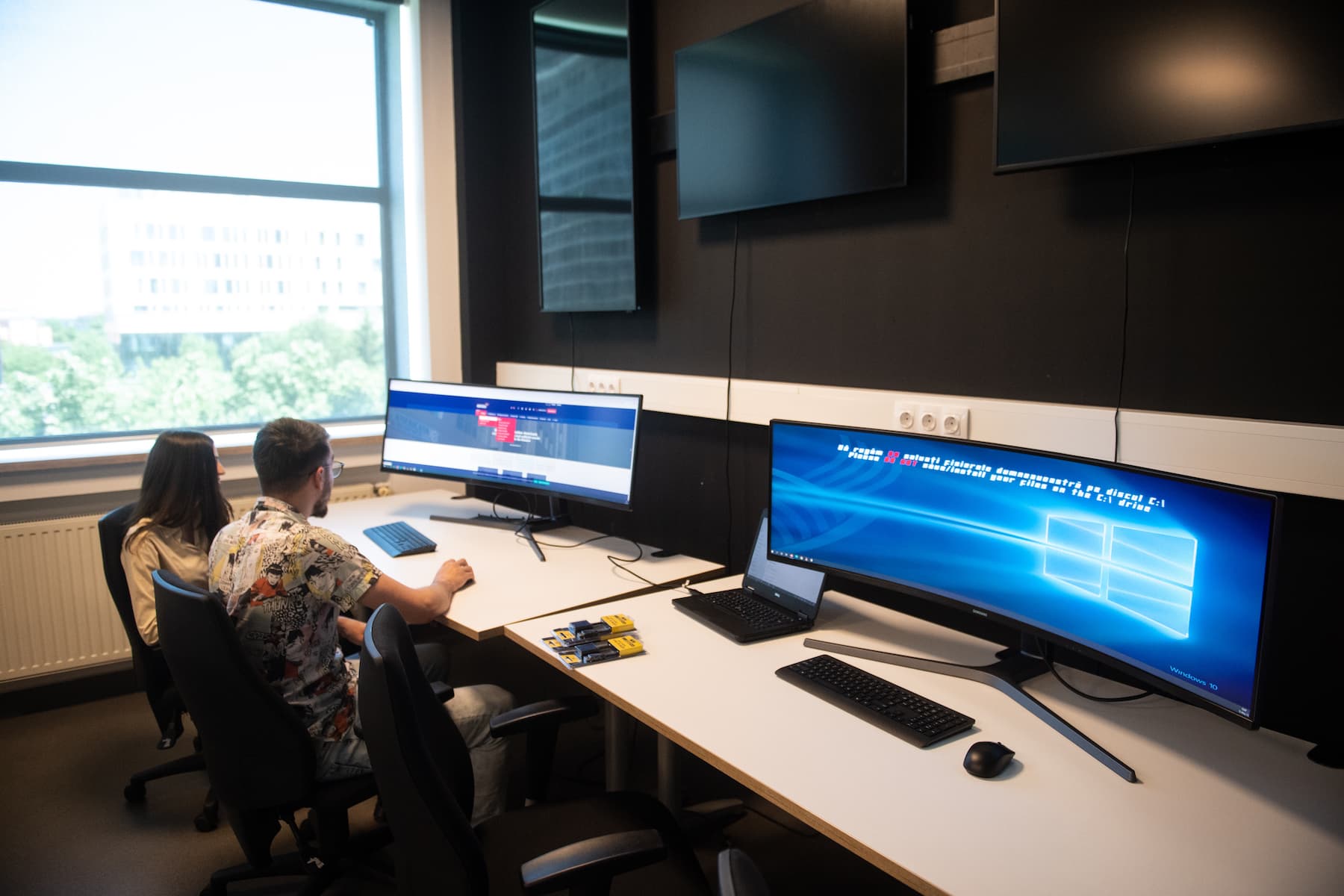
RAU’s future-oriented approach is also visible in its decision to integrate artificial-intelligence (AI) competencies across its degree programmes. The initiative is not limited to computer-science students. Instead, the university treats AI literacy as a transversal skill relevant to graduates in business, law, sport, healthcare and other professional areas.

The educational pathway combines critical thinking with digital competencies, practical work with AI tools and prompt engineering. It also includes learning focused on process optimization and automation. Depending on their specialization, students may encounter subjects such as AI in Business & Industry, AI in Sport and Kinesiotherapy, and Cybercrime Law.

"

The objective is not simply to teach students how to operate a particular platform. As AI tools will continue to change, the university also aims to develop the ability to assess their output, understand their limitations and consider the ethical or professional risks involved in their use.

This approach is supported by specialist structures including RAU’s Center for Research in AI, Computational Science & Machine Intelligence and its Center for Robotics, IoT & Applied Informatics. Students also have access to applied training in areas such as data analysis, automation, AI for business and prompt engineering. RAU has developed additional professional and postgraduate programmes focused on AI agents for business and marketing, AI project implementation, digital commerce and AI-supported content and data analysis.

These initiatives reflect a labor market in which AI-related roles are no longer confined to software development. Organizations also need professionals who can identify useful applications, manage implementation and connect technology with broader business objectives.

Learning from companies and leaders

Practical skills are also developed through extracurricular initiatives and industry-linked training.

Depending on their field, students can pursue additional qualifications connected to digital platforms, cybersecurity, automation, cloud technologies and professional software. In tourism and aviation, RAU’s status as an authorized International Air Transport Association training center gives students access to industry-specific courses and certifications.

Alongside the advisory boards, which bring together recognised specialists from fields directly related to each RAU study programme and help align curricula with evolving labour-market needs, this continuous process of adaptation is further strengthened through the LEADERS @RAU initiative, which brings academic knowledge into direct dialogue with professional practice.

The programme brings students into direct contact with leading professionals from business, diplomacy, public policy and international institutions. Working alongside faculty members, recognised specialists in their fields contribute to exploring and further developing academic topics directly related to the curriculum, bringing professional insight and real-world perspectives into the learning process. It is designed as more than a conventional guest-lecture series, creating sustained links between academic learning and the complexity, pace and evolving realities of the professional world.

Through these encounters, students gain exposure to skills that are difficult to learn from textbooks alone: judgement, ethical responsibility, negotiation, communication and decision-making under uncertainty.

LEADERS @RAU presents education as an ongoing dialogue between knowledge and practice, preparing graduates not only to succeed in a changing world but also to help shape it.

International experience for a global labor market

Future careers will also require many graduates to work across cultures, markets and time zones. RAU addresses this through English-taught programmes, international professors, mobility opportunities and partnerships with universities outside Romania.

Through Erasmus+ and other exchanges, students can study abroad, while international students spend a semester or academic year in Bucharest. These experiences can strengthen language skills, independence and the ability to adapt to unfamiliar educational and professional environments.

RAU’s dual-degree pathways with institutions in the United States, the United Kingdom, Italy and Japan add another international dimension. They connect study in Bucharest with foreign curricula, academic networks and, depending on the programme, periods of study abroad.

This experience is relevant even for graduates who plan to work in Romania. Many local employers operate within international groups or work with foreign clients, suppliers, investors and colleagues.

No university can predict exactly which professions will dominate the coming decades. Some occupations will change, new specializations will emerge, and technologies that are currently experimental may become part of everyday work. RAU’s answer is to combine new academic fields with skills that can travel between professions.

By launching programmes such as Architecture, Psychology and General Nursing, integrating AI and digital competencies across its curricula, maintaining close links with employers and expanding practical and international learning, the university is seeking to prepare graduates for more than their first job.

The broader goal is to develop professionals who can continue learning, adapt as industries evolve and combine specialist expertise with technological confidence, international awareness and sound judgement.

*This is native content supported by RAU.

Normal
Partner Content

Beyond the classroom: How the Romanian-American University in Bucharest is preparing students for the jobs of the future

19 August 2026

The jobs awaiting today’s university students may look very different by the time they reach the middle of their careers. Artificial intelligence is changing how companies operate, automation is reshaping established professions, and employers increasingly need people who can move confidently between disciplines, technologies and cultures.

Technical knowledge remains essential, but it is no longer enough on its own. Graduates are also expected to analyze information critically, communicate clearly, use emerging technologies responsibly and continue learning as their industries evolve.

At the Romanian-American University in Bucharest, commonly known as RAU, the response to this uncertainty is to connect academic education with the professional world long before graduation, helping students adapt, step by step, throughout their academic journey to changes in the labour market, technology, and society.

The university combines a forward-looking curriculum with practical training, business partnerships, international experiences and extracurricular learning. Rather than treating employability as a final step at the end of a degree, RAU seeks to build it into the broader student experience.

Keeping education connected to the workplace

A central element of this model is the university’s relationship with employers and other public and private institutions.

RAU offers programmes across fields including international business, finance, marketing, computer science, tourism, law, psychology, healthcare and architecture. Through regular dialogue with companies and socio-economic partners, the university adapts its curricula to reflect both current labor-market requirements and the future development of the professions for which students are preparing.

The involvement of the business community extends beyond providing feedback on courses. Company representatives, entrepreneurs and other professionals take part in workshops, conferences, mentoring sessions, applied projects and networking events. These encounters give students direct access to industry expertise and a clearer understanding of how organizations work, what employers expect and how decisions are made in professional settings.

Internships and practical training provide another bridge between theory and work. Students can test academic knowledge in real situations, explore possible career paths and begin building professional networks before graduation.

RAU reports that 77% of its graduates find employment in the field they studied or in a related area. The figure is higher in technology-focused studies: according to the university, more than 92% of graduates from its School of Computer Science for Business Management secure employment in their field within one year.

Architecture as a new international pathway

One of the clearest examples of RAU adapting its academic offer to changing professional needs is the launch of its new School of Architecture.

The English-taught Architecture programme is expected to welcome its first students in the fall of 2026. Structured as an integrated six-year bachelor’s and master’s pathway, it is being developed in partnership with the NewSchool of Architecture & Design in San Diego, California. The programme is designed as an international route, allowing students to study in both Bucharest and the United States and pursue qualifications from RAU and the American institution.

Its launch comes as architecture itself is becoming increasingly multidisciplinary. Future architects are expected to understand not only design, but also sustainability, digital technologies, project coordination, international standards and the needs of increasingly complex urban environments. RAU presents the programme as preparation for professionals capable of working across these areas and within international teams. Its proposed pathway includes three years in Bucharest, two years in the United States and a final year in Romania.

The new programme also reflects a broader shift in the university’s portfolio. RAU is moving into fields where demographic, technological and social changes are increasing the need for qualified professionals.

A bachelor’s programme in Psychology was added following provisional authorization in 2025. Its curriculum is intended to support careers in areas such as counselling, human resources, organizational psychology, education and vocational guidance.

Healthcare is another new direction. A four-year General Nursing programme was provisionally authorized in 2025 within RAU’s School of Medical Sciences. The programme responds to a field shaped by workforce shortages, changing patient needs, digitalization and a growing emphasis on professional autonomy and leadership.

Together, these new specializations broaden a university portfolio previously centered largely on business, economics, law, tourism, sport and technology.

Bringing AI into every field

RAU’s future-oriented approach is also visible in its decision to integrate artificial-intelligence (AI) competencies across its degree programmes. The initiative is not limited to computer-science students. Instead, the university treats AI literacy as a transversal skill relevant to graduates in business, law, sport, healthcare and other professional areas.

The educational pathway combines critical thinking with digital competencies, practical work with AI tools and prompt engineering. It also includes learning focused on process optimization and automation. Depending on their specialization, students may encounter subjects such as AI in Business & Industry, AI in Sport and Kinesiotherapy, and Cybercrime Law.

"

The objective is not simply to teach students how to operate a particular platform. As AI tools will continue to change, the university also aims to develop the ability to assess their output, understand their limitations and consider the ethical or professional risks involved in their use.

This approach is supported by specialist structures including RAU’s Center for Research in AI, Computational Science & Machine Intelligence and its Center for Robotics, IoT & Applied Informatics. Students also have access to applied training in areas such as data analysis, automation, AI for business and prompt engineering. RAU has developed additional professional and postgraduate programmes focused on AI agents for business and marketing, AI project implementation, digital commerce and AI-supported content and data analysis.

These initiatives reflect a labor market in which AI-related roles are no longer confined to software development. Organizations also need professionals who can identify useful applications, manage implementation and connect technology with broader business objectives.

Learning from companies and leaders

Practical skills are also developed through extracurricular initiatives and industry-linked training.

Depending on their field, students can pursue additional qualifications connected to digital platforms, cybersecurity, automation, cloud technologies and professional software. In tourism and aviation, RAU’s status as an authorized International Air Transport Association training center gives students access to industry-specific courses and certifications.

Alongside the advisory boards, which bring together recognised specialists from fields directly related to each RAU study programme and help align curricula with evolving labour-market needs, this continuous process of adaptation is further strengthened through the LEADERS @RAU initiative, which brings academic knowledge into direct dialogue with professional practice.

The programme brings students into direct contact with leading professionals from business, diplomacy, public policy and international institutions. Working alongside faculty members, recognised specialists in their fields contribute to exploring and further developing academic topics directly related to the curriculum, bringing professional insight and real-world perspectives into the learning process. It is designed as more than a conventional guest-lecture series, creating sustained links between academic learning and the complexity, pace and evolving realities of the professional world.

Through these encounters, students gain exposure to skills that are difficult to learn from textbooks alone: judgement, ethical responsibility, negotiation, communication and decision-making under uncertainty.

LEADERS @RAU presents education as an ongoing dialogue between knowledge and practice, preparing graduates not only to succeed in a changing world but also to help shape it.

International experience for a global labor market

Future careers will also require many graduates to work across cultures, markets and time zones. RAU addresses this through English-taught programmes, international professors, mobility opportunities and partnerships with universities outside Romania.

Through Erasmus+ and other exchanges, students can study abroad, while international students spend a semester or academic year in Bucharest. These experiences can strengthen language skills, independence and the ability to adapt to unfamiliar educational and professional environments.

RAU’s dual-degree pathways with institutions in the United States, the United Kingdom, Italy and Japan add another international dimension. They connect study in Bucharest with foreign curricula, academic networks and, depending on the programme, periods of study abroad.

This experience is relevant even for graduates who plan to work in Romania. Many local employers operate within international groups or work with foreign clients, suppliers, investors and colleagues.

No university can predict exactly which professions will dominate the coming decades. Some occupations will change, new specializations will emerge, and technologies that are currently experimental may become part of everyday work. RAU’s answer is to combine new academic fields with skills that can travel between professions.

By launching programmes such as Architecture, Psychology and General Nursing, integrating AI and digital competencies across its curricula, maintaining close links with employers and expanding practical and international learning, the university is seeking to prepare graduates for more than their first job.

The broader goal is to develop professionals who can continue learning, adapt as industries evolve and combine specialist expertise with technological confidence, international awareness and sound judgement.

*This is native content supported by RAU.

Normal

Romania Insider Free Newsletters